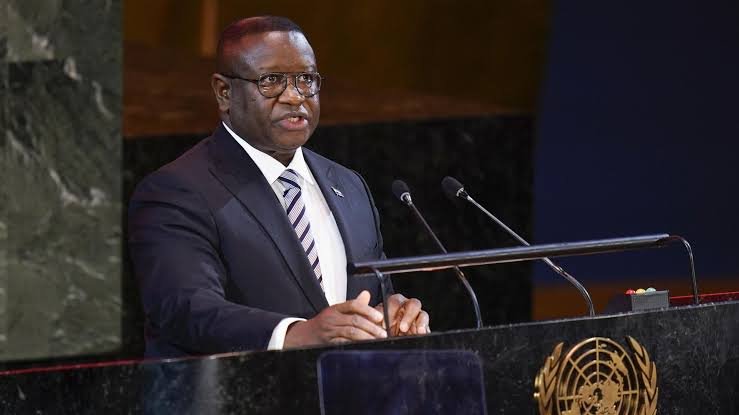
Sierra Leone has renewed its demand for fundamental reform of the United Nations Security Council, with President Julius Maada Bio arguing that Africa’s continued exclusion from permanent membership undermines the legitimacy and effectiveness of the global body.
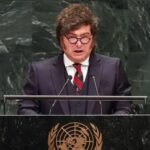
Bio made the call while addressing world leaders during the General Debate of the 81st session of the United Nations General Assembly in New York.
The Sierra Leonean president said the composition of the Security Council remained largely shaped by the geopolitical realities that followed World War II and no longer reflected the structure of the contemporary world.
He pointed out that Africa, home to more than 1.6 billion people and frequently at the centre of issues considered by the Council, still has no permanent seat.
“Africa, home to more than 1.6 billion people and the subject of much of the Council’s work, still has no permanent seat,” Bio said.
“Africa seeks its rightful place because the Council cannot be fully legitimate or effective while an entire continent remains permanently absent from its highest level of decision-making.”
Sierra Leone currently coordinates the African Union Committee of Ten on UN Security Council reform and is advocating two permanent seats and five non-permanent seats for African countries, in line with the common African position on reform.
Bio also linked stronger African representation to the international community’s ability to address major global challenges.
“No durable global solution on peace, climate, food, energy or technology can be built without African leadership,” he asserted.
He expressed concern about the prolonged Intergovernmental Negotiations on Security Council reform, saying the process had yet to deliver the outcome expected by member states.
“Years of Intergovernmental Negotiations without realising the reform have tested the credibility of the process,” he said.
Bio urged member states to make concrete progress before the end of the current General Assembly session.
“Before this session concludes, Member States should have a consolidated model, which we committed to in the Pact for the Future,” he said.
Reflecting on Sierra Leone’s own tenure on the Security Council in 2024 and 2025, Bio said his country used its membership to promote dialogue and cooperation.
“Sierra Leone speaks with the authority of service; during its Council term in 2024 and 2025, we worked as a voice of reason and a bridge across division,” he said.
He maintained that representation should go beyond simply securing seats and should translate into greater influence over international decisions and tangible improvements in people’s lives.
“Representation becomes meaningful when it changes decisions and improves lives,” Bio stated.
The president further argued that the imbalance in global representation extends beyond the Security Council, pointing to similar concerns within international financial institutions.
He connected Sierra Leone’s position on global reform to the historical experiences of African countries, saying the consequences of those experiences remained visible in disparities in wealth, power and opportunity.
“For Sierra Leone, this history is neither abstract nor distant,” Bio said, adding that its “legacy continues to be reflected in enduring disparities in wealth, power and opportunity across our world.”
He said Sierra Leone would continue to pursue what it considers historical justice, stressing that its demands were not for preferential treatment.
Rather, he described the position as a call “for acknowledgement, formal apology, the return of cultural heritage, fair redress and guarantees of non-repetition.”