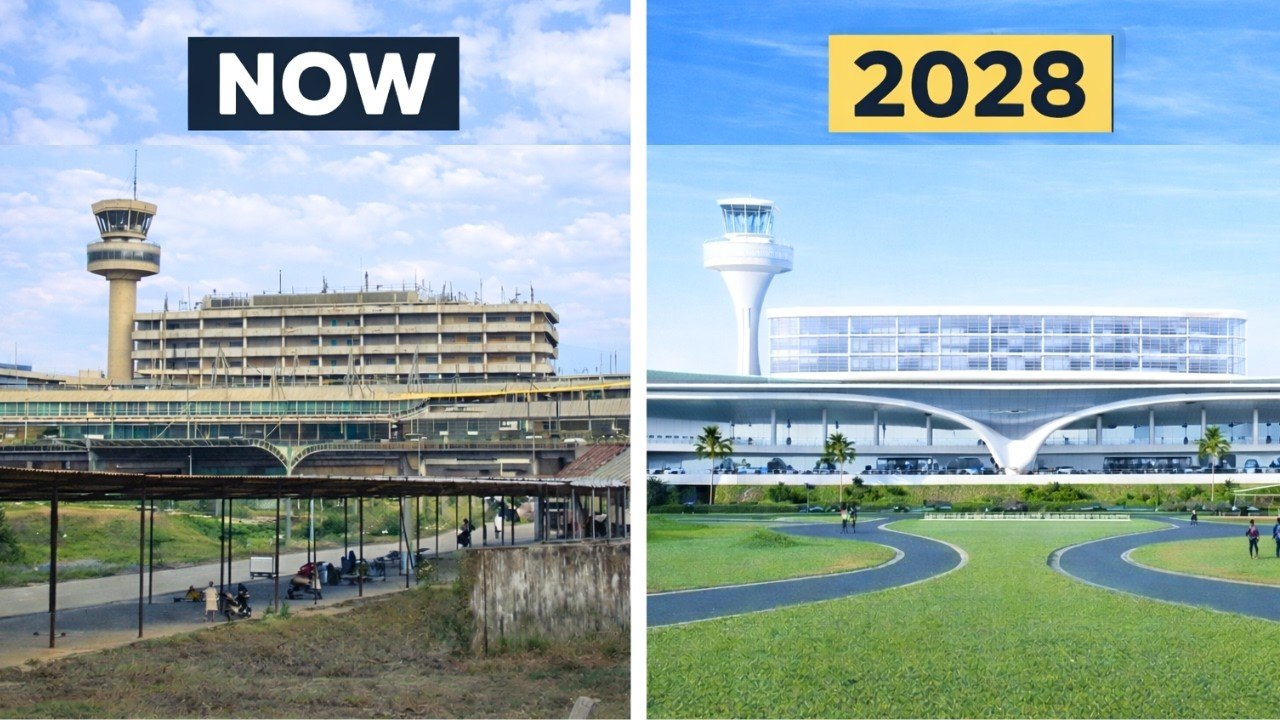
For decades, the Murtala Muhammed International Airport (MMIA), Lagos, has served as Nigeria’s busiest gateway to the world.
Millions of passengers pass through its terminals annually. Business executives, tourists, students, investors and returning Nigerians often experience the airport as their first impression of the country.
Yet for years, concerns over ageing infrastructure, congestion, passenger comfort and operational efficiency have dominated conversations about Nigeria’s premier aviation hub.
Today, however, a major transformation is underway.
From new terminal facilities and expanded boarding infrastructure to modern technology systems and plans for rail connectivity, authorities say the airport is being redesigned to meet the demands of a modern aviation industry.
The Project Taking Shape
During a recent inspection of ongoing works, Federal Airports Authority of Nigeria (FAAN) Managing Director, Mrs. Olubunmi Kuku, expressed optimism about the pace of construction.
According to her, one of the key milestones has been reached with the completion of the final major concrete pouring for parts of the project.
The development forms part of broader expansion efforts that include improvements to Terminal 1, expansion of boarding fingers at Terminal 2 and the creation of a transit hub aimed at improving passenger movement within the airport environment.
Standing amid the construction activity, Kuku acknowledged the inconvenience many passengers have experienced as a result of the ongoing works.
“I know Nigerians have expressed concerns about the traffic and disruptions,” she said, appealing for patience as the projects near completion.
The reassurance comes at a time when passengers have increasingly complained about access challenges around the airport caused by simultaneous construction and operational activities.
A New Look for an Old Airport
MMIA has been in operation for more than five decades.
Over the years, passenger traffic has increased significantly, placing pressure on infrastructure originally designed for a much smaller aviation market.
Airport development experts often argue that major international gateways require continuous upgrades to remain competitive and meet evolving passenger expectations.
According to FAAN, the current project seeks to address these challenges.
One of the most visible features is the emerging iconic structure around Terminal 1, designed with an eagle-inspired architectural concept intended to create a distinctive visual identity for the airport.
Construction teams are also working on new canopies, upgraded facades and improved passenger processing areas.
Beyond aesthetics, authorities say the focus is on creating a smoother passenger experience.
Technology at the Centre
While physical infrastructure is attracting public attention, FAAN says significant investments are also being directed toward technology.
Recent reviews have focused on baggage handling systems, passenger check-in technologies, flight information display systems and retail planning within the terminals.
The objective, according to airport authorities, is to create a more efficient travel experience from arrival to departure.
The emphasis on technology reflects global trends within the aviation industry, where airports increasingly rely on automation and digital systems to improve efficiency and reduce passenger waiting times.
Accessibility and Inclusion
Another area receiving attention is accessibility.
Passengers with disabilities and limited mobility have often faced challenges navigating airport facilities.
FAAN says the new upgrades are being designed to address these concerns.
According to Kuku, new equipment and infrastructure are being introduced to improve mobility for passengers requiring assistance.
These include wheelchair-accessible ramps, elevators, improved gate access and enhanced information systems capable of supporting passengers with visual and hearing impairments.
Airport authorities also revealed that additional ambulifts have been introduced to facilitate boarding and disembarkation for passengers with reduced mobility.
The Rail Connection Dream
Perhaps one of the most ambitious aspects linked to the airport’s future is the proposed light rail connection.
The project aims to connect the airport more directly with parts of Lagos, reducing dependence on road transportation.
If completed, the rail system would provide multiple stops around the airport precinct and create a faster connection between the airport and other parts of the city.
For a city notorious for traffic congestion, such a development could significantly alter how passengers access the airport.
Although the project remains in the planning and procurement stages, environmental assessments and design reviews are reportedly ongoing.
Authorities describe it as a landmark initiative that would complement the broader airport modernisation programme.
Balancing Construction and Operations
One of the biggest challenges facing airport managers is carrying out extensive construction work without shutting down operations.
Unlike a new airport being built from scratch, MMIA continues to handle thousands of passengers daily while construction progresses around it.
FAAN acknowledges that this balancing act has not been easy.
Managing passenger movement, vehicle access, construction logistics and airline operations simultaneously has created unavoidable disruptions.
Temporary traffic diversions, altered access routes and changes to terminal circulation have all contributed to passenger frustrations.
Authorities have responded by deploying additional personnel, improving signage and urging travellers to arrive several hours before departure.
Why It Matters
Airports are more than transportation facilities.
They are symbols of national identity and economic ambition.
For investors, tourists and international visitors, airports often provide the first tangible impression of a country.
As Africa’s largest economy and one of the continent’s leading aviation markets, Nigeria’s ability to provide efficient airport infrastructure carries significant implications for tourism, trade, investment and regional competitiveness.
The transformation of MMIA therefore extends beyond construction projects and architectural designs.
It represents an attempt to redefine the experience of entering and leaving Nigeria.
Looking Ahead
The cranes, scaffolding and construction barriers currently visible around MMIA may be temporary.
What authorities hope will remain is a modern airport capable of meeting international standards and serving the needs of a growing aviation market.
For now, passengers continue to navigate traffic delays and construction inconveniences.
But if the promises of airport authorities materialise, the reward could be a more efficient, accessible and globally competitive gateway for Nigeria.
The challenge will be ensuring that when the dust settles and the construction crews leave, the airport delivers not only new buildings, but also the world-class passenger experience Nigerians have long awaited.