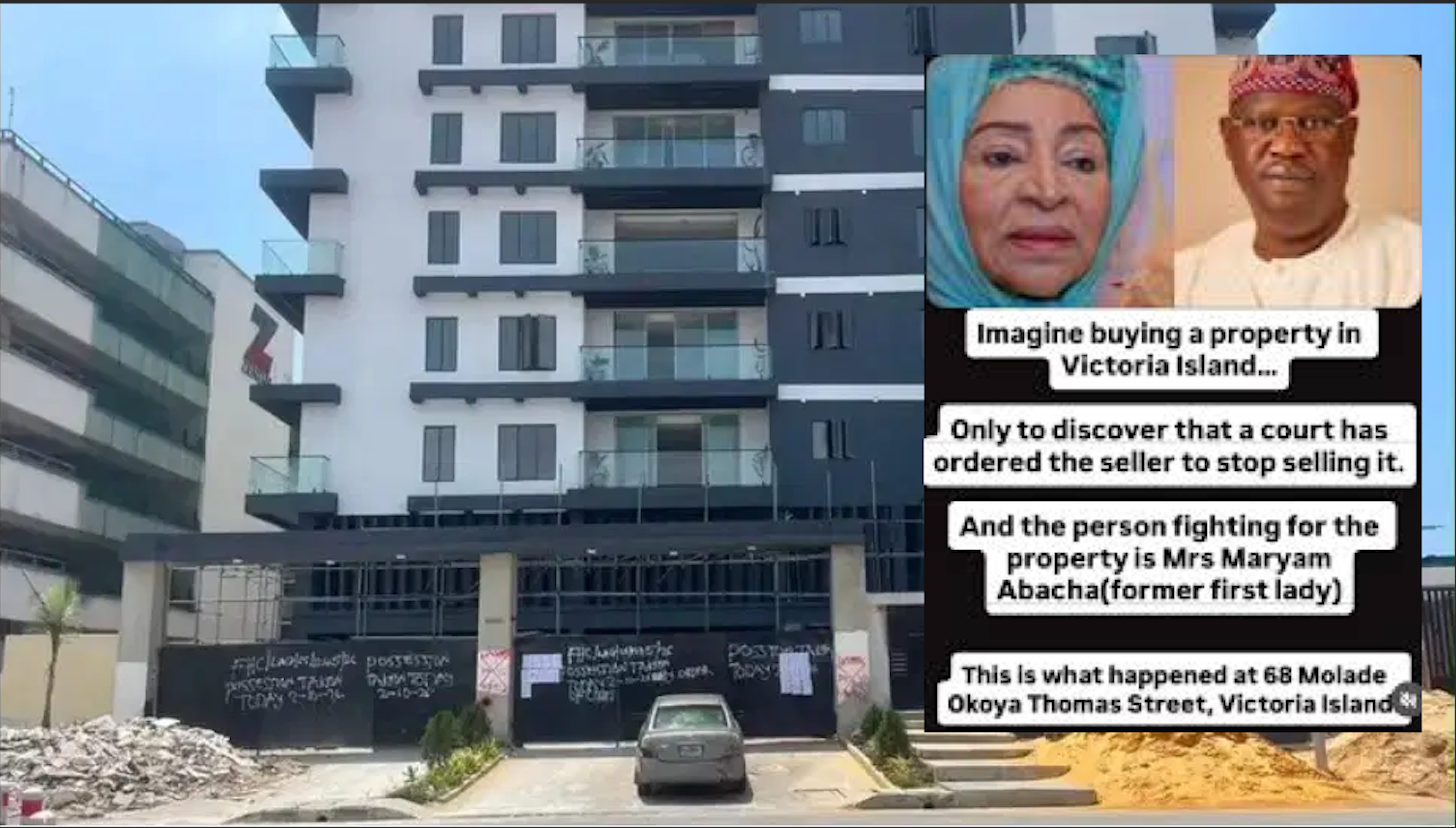
Media professional and activist David Abakpa has called for a fair hearing in the legal dispute between Levitikal Realties & Construction Limited and Maryam Sani Abacha over the redevelopment of a property at 68 Molade Okoya Thomas Street, Victoria Island, Lagos.
Abakpa said the case involved more than a disagreement over land ownership, arguing that the court should examine the parties’ contractual relationship, the developer’s reported expenditure and the circumstances surrounding changes to the original development plan.
He stressed that an interim court order appointing a receiver/manager over the project must be obeyed but should not be interpreted as a final determination of the substantive dispute.
“Fairness cannot mean hearing only one side. It must mean hearing both sides fully,” he said.
According to Abakpa, media reports indicate that the parties initially entered into a Property Development Joint Venture Agreement before a power of attorney was subsequently issued to Levitikal. He said the legal implications of the two arrangements should be examined to establish the parties’ respective rights and obligations.
He also pointed to challenges the developer allegedly faced before construction began, including difficulties obtaining vacant possession from existing tenants, outstanding land-related taxes payable to the Lagos State Government, demolition and excavation expenses.
Abakpa said the project encountered further financial pressure after the removal of the fuel subsidy in 2023, which contributed to rising costs of construction materials, transportation and labour.
He claimed Levitikal subsequently secured approval for additional land on which two-bedroom and three-bedroom flats could be constructed, describing the expansion as an attempt to manage the project’s financial burden and support completion of the original nine units.
The activist estimated the land’s value at approximately ₦400 million when the agreement was reached and cited figures suggesting that Levitikal had invested more than ₦17 billion in the development. He also referred to projections placing the landowners’ potential earnings from the completed project at about ₦9 billion.
However, he cautioned that the reported investment figure should not be accepted without verification.
“The figure should be tested through contracts, bank records, invoices, construction records and other documentary evidence,” he said.
Abakpa also questioned when objections to the additional buildings were first raised, noting reports that representatives of the Abacha family had visited the site during construction. He said the timing and substance of any objections should be established through correspondence, site records and other evidence rather than public speculation.
The dispute also raises concerns about subscribers who reportedly paid for units in the original development and are awaiting delivery. Abakpa warned that prolonged litigation could affect their interests, although their circumstances do not determine the legal rights of either party.
On the court proceedings, he explained that an ex parte order is made without hearing the opposing party at that stage and may serve to preserve the position pending further proceedings. He emphasised, however, that an interim order remains binding until it is set aside by a competent court.
Abakpa said the court should consider the original agreement, the subsequent power of attorney, the developer’s performance, the additional land, construction approvals and the circumstances surrounding a reported demand for a 50:50 sharing arrangement.
He maintained that Maryam Abacha was entitled to present her case and pursue remedies available under the law, just as Levitikal should have the opportunity to substantiate its investment claims and respond to allegations concerning the project.
“Levitikal does not need public sympathy. It needs the opportunity to present its documents, explain its investment, answer the allegations against it and have its contractual rights determined on the evidence,” he said.
Abakpa urged that the dispute be resolved on the strength of the parties’ agreements, documentary evidence and applicable law, rather than their public profiles.