From aviation and agriculture to the blue economy, maritime transportation and public health, climate information provides the scientific guidance needed to protect lives, safeguard investments and keep the economy running.
But the real value of a weather forecast lies not only in predicting what may happen, but in helping people prevent a potential hazard from becoming a disaster.
This was the message from the Minister of Aviation and Aerospace Development, Festus Keyamo, who stressed the economic benefits of preventive investment and the need to strengthen the connection between climate information, early warning systems and preparedness.
The call came at the Alliance for Hydrometeorological Development Annual Meeting 2026 in Lagos, where stakeholders examined how partnerships, innovation and sustainable investment can strengthen weather, water and climate services.
A change in rainfall can determine whether a farmer plants on time or loses a harvest. Strong winds and poor visibility can affect flight operations, while rough seas and changing weather conditions can pose risks to maritime transportation and coastal communities.
Climate information, therefore, is more than a scientific forecast. It is an important tool for decision-making, disaster preparedness and economic planning.
For Nigeria, with an area of approximately 923,768 square kilometres and communities exposed to different weather and climate risks, the ability to anticipate these changes and communicate warnings promptly remains critical.
The challenge, however, goes beyond predicting rainfall, rising temperatures or extreme weather. It is ensuring that the information reaches the people who need it, in a form they understand, early enough for them to act.
At the Alliance for Hydrometeorological Development Annual Meeting 2026, hosted by the Nigerian Meteorological Agency, NiMet, stakeholders called for stronger partnerships and sustained investment to improve the delivery and use of weather, water and climate information.
Minister of Aviation and Aerospace Development, Festus Keyamo, highlighted the need to prioritise preventive measures, stressing that investment in early warnings and disaster risk reduction can help limit the human and economic costs of emergencies.
The World Meteorological Organization estimates that early warning systems deliver a nearly tenfold return on investment. This reinforces the argument that preparing for a potential disaster can cost significantly less than responding after lives, infrastructure and livelihoods have been lost.
Keyamo’s message was that Nigeria must strengthen the connection between climate information, preparedness and practical action across relevant sectors.
The economic case for climate services becomes clearer when the consequences of inadequate preparation are considered.
For farmers, reliable seasonal forecasts can help guide planting decisions, crop selection and the timing of agricultural activities. NiMet’s 2026 Seasonal Climate Prediction, for example, provides information on rainfall onset and cessation, temperature, dry spells, growing-season length and other variables relevant to agricultural planning.
For aviation, meteorological information supports flight safety and operational decisions. At sea, marine forecasts can help vessel operators assess weather conditions and plan their movements. For communities, timely warnings can create an opportunity to move people and property away from danger.
NiMet’s statutory responsibilities include providing weather and climate information for the safe operation of aircraft, ocean-going vessels and oil rigs, alongside forecasts and information for the general public and weather-sensitive businesses.
But a forecast can only achieve its full purpose when the next steps are in place: communicating the warning, identifying who is at risk and ensuring that the appropriate response can be carried out.
The World Meteorological Organization emphasises that effective early warning systems depend on four connected elements: understanding disaster risks, detecting and forecasting hazards, communicating warnings, and ensuring that people and institutions are prepared to respond.
A weakness in any of these areas can undermine the entire system.
A warning that arrives too late may offer little protection. One that does not reach a rural community, a fishing settlement or a vulnerable household may leave those at risk without the information they need. And even when a warning is received, the absence of evacuation arrangements, emergency resources or clear instructions can limit its impact.
This is why stakeholders at the Lagos meeting stressed the importance of investment in infrastructure, technology, institutional capacity and collaboration among government agencies, the private sector, development partners and local communities.
The emphasis on international cooperation reflects a wider global effort to expand access to life-saving early warning systems.
The World Meteorological Organization and its partners are working through the Early Warnings for All initiative, which aims to ensure that everyone on Earth is protected by early warning systems by the end of 2027.
The initiative recognises that forecasting technology alone is not enough. Effective protection also requires reliable observation networks, data sharing, accessible communication channels and the capacity to respond when warnings are issued.
For Nigeria, achieving these goals will require sustained investment in meteorological infrastructure, technical expertise and the systems that connect scientific information to decision-makers and the public.
It will also require cooperation between institutions responsible for weather forecasting, water management, emergency response, transportation, agriculture and public safety.
Climate risks do not respect administrative boundaries, and the consequences of a poorly managed warning can extend well beyond the community where a hazard begins.
Stakeholders also highlighted the relationship between climate services and sustainable development, noting that weather and climate conditions affect far more than disaster management.
Agriculture and food security depend partly on reliable information about rainfall and temperature. Public health authorities can use climate information to support planning for weather-sensitive health risks. Transportation operators need weather updates to make informed operational decisions, while businesses and investors need reliable information to assess exposure to climate-related risks.
The meeting’s theme, Partnerships, Innovation and Sustainable Investment in Weather, Water and Climate Services, therefore placed financing and cooperation at the centre of discussions about strengthening these services.
Stakeholders called for stronger government funding and greater private-sector participation to improve forecasting capacity, maintain essential infrastructure and support services that meet international standards.
The objective is to move beyond treating weather information as a routine public service and recognise it as part of the infrastructure required for economic resilience and public safety.
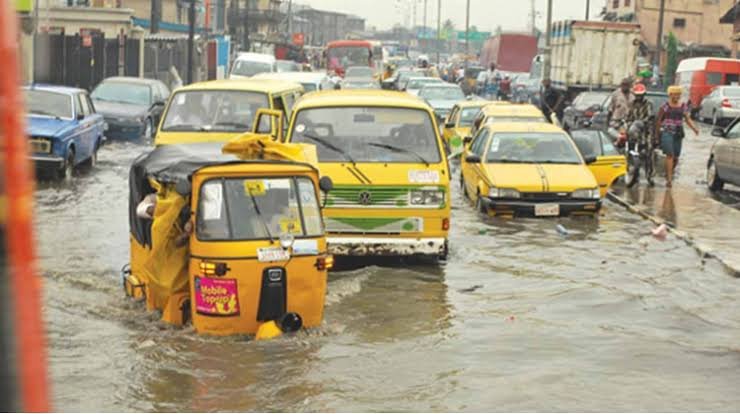
As Nigeria continues to confront weather-related risks, the question is no longer simply whether a storm, flood or period of extreme weather can be predicted.
It is whether the warning will reach the right people in time, whether they will understand what it means, and whether the resources needed to act will be available.
The Alliance for Hydrometeorological Development Annual Meeting 2026 has renewed attention on the role of investment, innovation and partnerships in closing that gap.
Because a forecast may tell a farmer when the rains are coming, warn an operator of dangerous conditions or alert a community to approaching danger. But science alone cannot evacuate a household, protect a harvest or secure a vessel.
And when the next warning comes, will Nigeria have done enough to ensure that the information does not simply predict a disaster, but helps prevent one?
In Lagos,