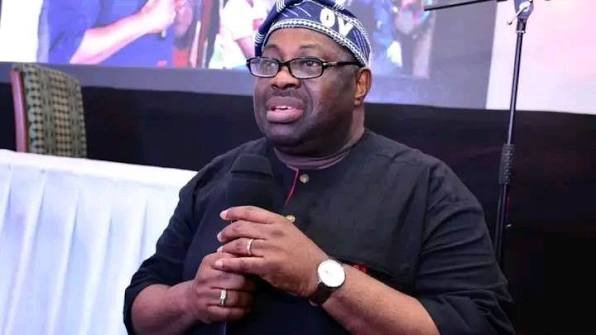
African Democratic Congress (ADC) chieftain Dele Momodu has raised concerns about President Bola Tinubu’s political influence, alleging that fear among public officials has weakened their willingness to challenge his administration.
Momodu, who publishes Ovation Magazine, made the allegations during an appearance on Arise Television’s Prime Time programme on Wednesday, where he also discussed opposition preparations for the 2027 presidential election.
According to him, governors, lawmakers and members of the judiciary have become increasingly reluctant to confront the President over his leadership.
“Governors are scared, judges are scared, legislators are scared,” Momodu declared, describing Tinubu’s political authority as unusually extensive.
He further alleged that some politicians publicly endorsing the President’s second-term ambition privately harbour reservations about his continued leadership.
However, he provided no independent evidence to establish the alleged private positions of those politicians.
Turning to the forthcoming election, Momodu claimed that opposition figures were developing strategies aimed at preventing Tinubu from securing another four years in office.
He declined to reveal details of those plans, arguing that political strategies should not necessarily be discussed publicly.
“I can’t tell you about strategy in public,” he said, maintaining that opposition politicians were working behind the scenes.
Momodu drew comparisons with Tinubu’s political struggles during his tenure as Lagos State governor, suggesting that determined political organisation could influence electoral contests.
He also questioned public confidence in the Independent National Electoral Commission, alleging that appointments to the electoral body had raised concerns about regional representation.
The ADC chieftain specifically criticised what he described as the appointment of too many individuals from the South-West.
He went further to claim that 90 per cent of Nigerians did not trust Tinubu to oversee a credible election.
However, no polling data or independently verifiable evidence was presented to support that figure.
Momodu also alleged that even some of the President’s supporters lacked confidence in the electoral process, although he did not identify individuals or provide evidence for the assertion.
When questioned about the possibility of Tinubu refusing to accept an electoral defeat, Momodu expressed confidence in the ability of ordinary Nigerians to influence the country’s political direction.
He argued that public determination, rather than opposition party organisation alone, would be important in the forthcoming election.
The interview highlighted the ADC chieftain’s concerns about political accountability, electoral credibility and the concentration of influence within Nigeria’s political system.
His remarks also reflected the increasingly public exchanges between opposition figures and supporters of the Tinubu administration ahead of the 2027 polls.
Nevertheless, Momodu’s allegations concerning political intimidation, private opposition to Tinubu and public distrust of the electoral process remain unsubstantiated by independently presented evidence.
Ezeana Emmanuel