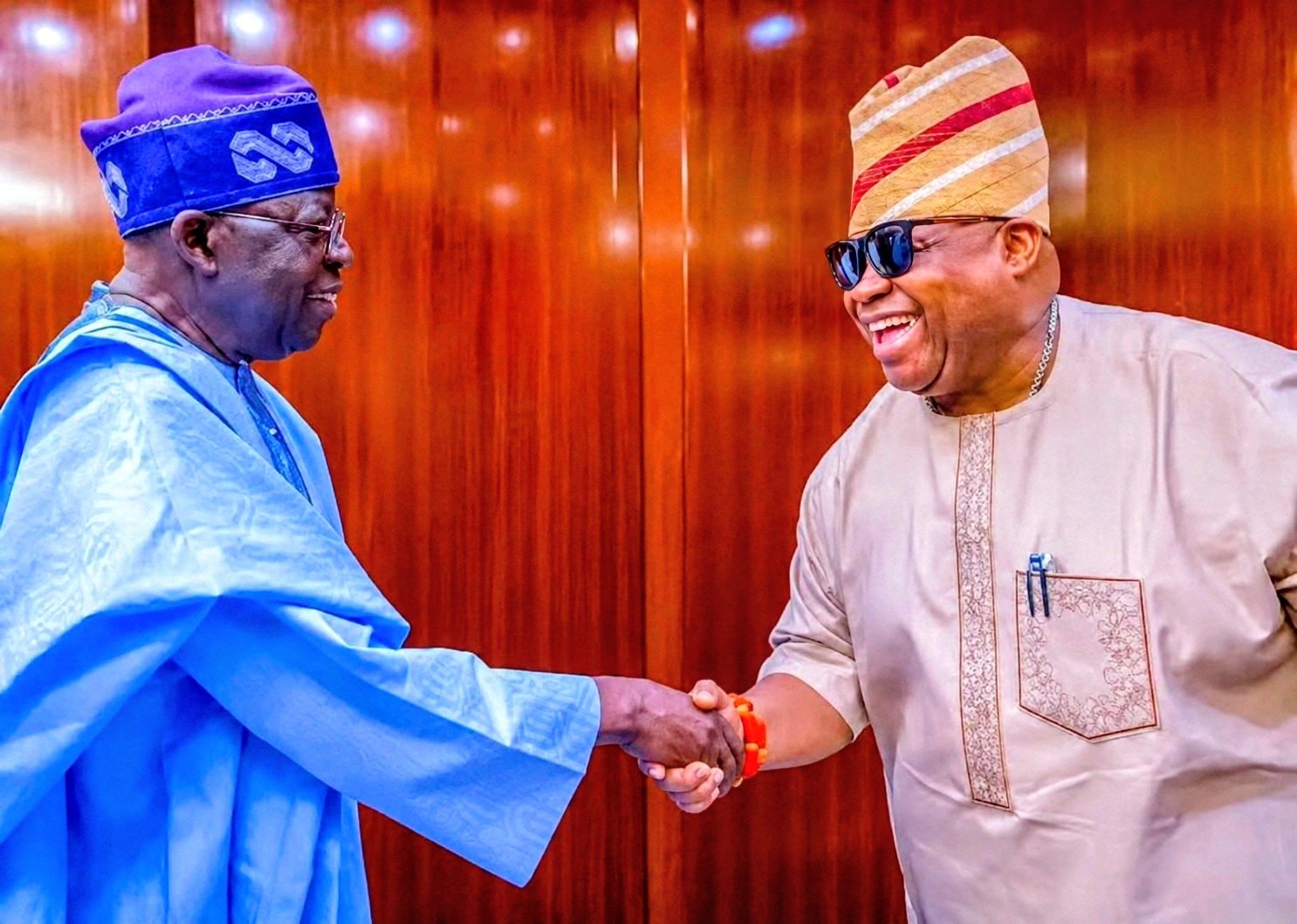
Following Adeleke’s appointment as the president’s campaign coordinator in the state, the Imole Campaign Council has assured Tinubu that its political machinery will deliver has promised President Bola Tinubu in Osun State ahead of the 2027 presidential election.
It is an interesting promise to make on behalf of people who have yet to enter a polling booth and this raises a disturbing question.
When did winning an election give a governor ownership of his constituents’ next votes?
The online discussion offers an immediate challenge to Adeleke’s arithmetic. Peter Obi Grassroots Commentary, an account on X, questioned how the governor could promise Tinubu 1.5 million votes when his own governorship tally was considerably smaller. Its political affiliation makes it a partisan intervention, but the question remains legitimate.
Adeleke won his recent election with 511,067 votes. Mobilising almost three times that number for another candidate requires considerably more explanation than confidence.
There is no wrong in estimating but to make a statement promising a large number of support with certainty definitely raises eyebrows. Campaign organisations are entitled to set ambitious goals. But a target should come with a credible account of how new voters will be persuaded, how turnout will grow and what record the candidate will present.
The language of “delivery” conveniently skips those questions.
Accord’s legislative candidates in Osun have publicly backed Adeleke’s involvement, arguing that their grassroots networks can mobilise support for Tinubu. From their perspective, the alliance represents political organisation and an opportunity to advance their interests.
A governor may sincerely believe that a presidential candidate from another party offers the best programme. Voters themselves routinely distinguish between candidates at different levels of government. Adeleke therefore has every right to explain why he supports Tinubu. What he cannot reasonably assume is that those who supported him have automatically reached the same conclusion.
Two Accord leaders in Lagos have demanded clarity about his allegiance, warning that coordinating a rival party’s presidential campaign could weaken Accord’s candidates and confuse its supporters. Their concern is particularly awkward because Accord has its own considerations for a presidential candidate.
Former Oyetola aide Ismail Omipidan has challenged the 1.5 million target and warned that putting Adeleke at the centre of Tinubu’s Osun campaign could alienate local APC members. His criticism reveals another weakness in the assumption that political structures can simply be added together. Their members have loyalties, grievances and choices of their own.
These reactions should not be inflated into a claim that all Nigerians feel betrayed. The accessible conversation includes partisan criticism, organised support and disagreement over electoral strategy. Social media cannot settle how Osun will vote.
It can, however, expose the question that political announcements often evade. Where does the average citizen fit into the bargain?
Accord’s presidential candidate, Gbenga Olawepo-Hashim, has insisted that Adeleke cannot compel Osun residents to vote for Tinubu. His electoral interest is obvious. The democratic principle is equally clear. A governor’s endorsement may influence voters; it cannot substitute for their consent.
Tinubu must earn those votes through his record and proposals. Adeleke must defend his endorsement before the people he governs. Both should expect citizens to judge them independently.
A campaign council can promise its labour, its resources and its best efforts. The votes belong to the voters.