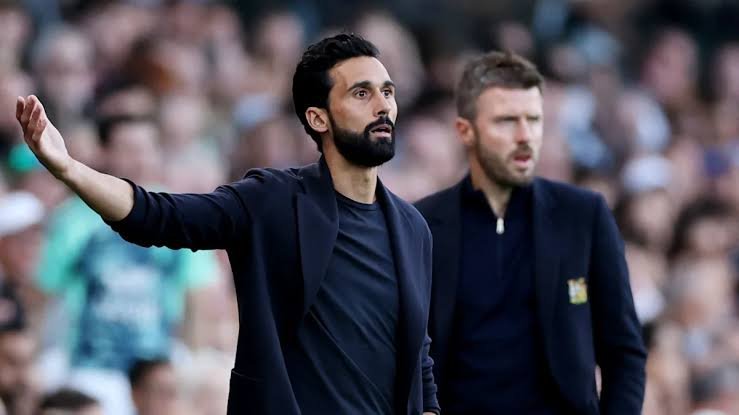
Fulham manager Alvaro Arbeloa has questioned the officiating in his side’s 1-1 draw with Manchester United, suggesting the Premier League giants benefited from several decisions during Sunday’s encounter at Craven Cottage.
The game appeared to be heading towards a Fulham victory after United struggled to find an equaliser, but Matheus Cunha rescued a point for the visitors with a deflected effort in the 89th minute.
Arbeloa’s frustration, however, centred on the free kick that preceded the late goal. The Fulham manager felt referee Michael Oliver was too quick to award United the set-piece after Cesar Palacios was judged to have fouled Harry Maguire.
The Spaniard questioned the decision, particularly given Maguire’s size, and argued that similar calls throughout the match had consistently gone in United’s favour.
“All fouls for them,” Arbeloa told Sky Sports. “You can see before they scored, the foul against Maguire. He’s a guy who is 100 kilos. Every decision was for them.”
His criticism went beyond the incident that led to Cunha’s equaliser. Arbeloa claimed the overall pattern of officiating appeared to favour Manchester United and suggested the referees may have been affected by events from the previous weekend.
United had suffered a 2-1 defeat to Manchester City in the Manchester derby, a match that also attracted controversy over the officiating. Erling Haaland scored what was initially awarded as the winning goal, although the decision was subsequently criticised because of an officiating error.
According to Arbeloa, those events influenced how Sunday’s match was handled.
“And I knew. I knew after the game against Man City that they would not let Manchester United lose here,” he said.
Despite surrendering the lead so late in the game, Arbeloa maintained that Fulham had done enough to take all three points.
“We deserved a little bit more,” the Fulham manager added.
United’s late equaliser ultimately ensured the points were shared, leaving Arbeloa to reflect not only on his team’s missed opportunity but also on what he regarded as a series of contentious decisions during the contest.