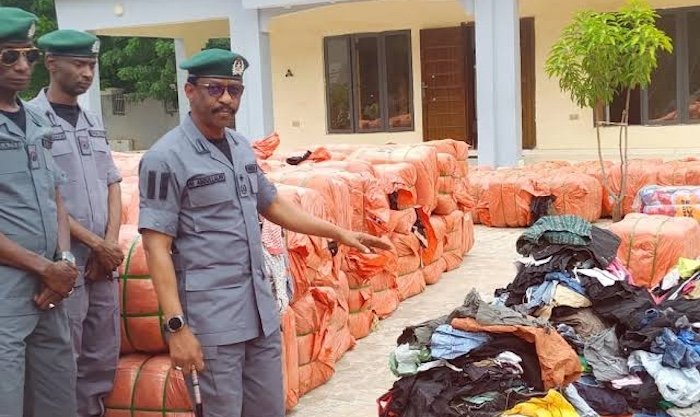
The Nigeria Customs Service (NCS) has intensified its crackdown on smuggling in the North-West, intercepting contraband valued at N722 million in Sokoto State.
The seized goods include second-hand clothing, women’s bags, cigarettes and several categories of unregistered pharmaceutical products allegedly being transported into the country illegally.
Acting Area Comptroller of the Sokoto/Zamfara Area Command, Halliru Isa-Abdullahi, disclosed the development during a press briefing on Thursday.
According to him, the confiscated items have a combined Duty Paid Value (DPV) of N722 million, representing one of the command’s reported successes in its ongoing anti-smuggling operations.
Among the recovered goods were bales of second-hand clothing, seven sacks of used women’s bags, 43 cartons of cigarettes and seven cartons of coffee.
The command also intercepted substantial quantities of pharmaceutical products, including 100 packages of quinine, 500 packages of amodiaquine and 140 packages of paracetamol.
Other confiscated medications included 300 packages of anti-cold drugs, a carton of analgesic injections, four cartons of Dynewell syrup and tablets, and one carton of Clear Cold.
Isa-Abdullahi explained that Customs operatives intercepted a used DAF truck allegedly employed to transport the prohibited goods.
He said the individuals conveying the consignment abandoned the vehicle after discovering that security personnel were following them.
The truck subsequently underwent repairs before being transported to Sokoto for further action.
The acting comptroller attributed the interception to sustained surveillance and enforcement operations despite security challenges affecting parts of Sokoto and Zamfara states.
He said the command remained committed to preventing illegal goods from entering Nigerian markets through unauthorised routes.
Isa-Abdullahi further explained that the operation aligned with the directives of Comptroller-General of Customs Bashir Adeniyi, whose anti-smuggling strategy emphasises consolidation, collaboration and innovation.
Beyond the economic implications of smuggling, the Customs official expressed particular concern about the public health risks associated with unregistered pharmaceutical products.
He warned that medicines brought into the country outside approved regulatory channels could expose consumers to serious health dangers.
According to him, reducing smuggling would also protect legitimate businesses, safeguard government revenue and strengthen the country’s capacity to finance essential public services.
The acting comptroller called on residents and other members of the public to provide credible intelligence that could assist Customs personnel in identifying and disrupting smuggling networks.
He also cautioned individuals involved in illegal cross-border trade to abandon the practice, insisting that enforcement operations would continue across the command’s jurisdiction.
Isa-Abdullahi maintained that cooperation between Customs personnel and local communities remained essential to securing Nigeria’s borders and preventing the circulation of prohibited goods.