


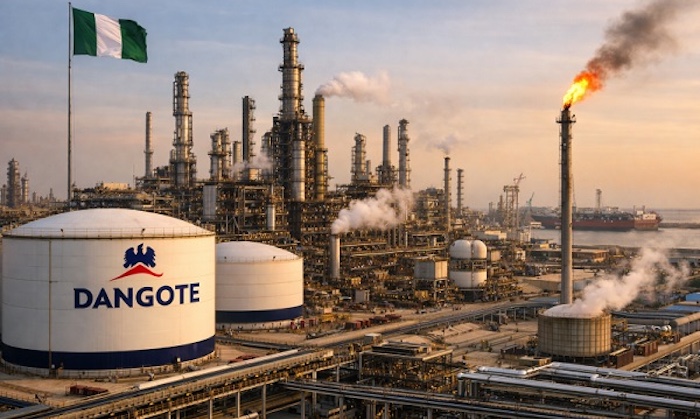
The Dangote Petroleum Refinery has purchased its first cargoes of Middle Eastern crude, sourcing two shipments from the United Arab Emirates in a move that marks a meaningful shift in how Africa’s largest refinery is managing its feedstock supply.
The purchases, reported by S&P Global Commodity Insights, represent the first time the 700,000-barrels-per-day facility has procured crude from any Middle Eastern supplier. Until now, the refinery’s import slate has leaned heavily on Nigerian, African, and American grades. In 2025, approximately 70% of its crude imports came from Nigeria, with the United States accounting for a further 24%.
The timing of the UAE purchases is connected to geopolitics as much as logistics. The cargoes followed the resumption of Middle Eastern oil exports after the United States and Iran reached an interim peace agreement that restored shipping confidence through the Strait of Hormuz. The window opened and Dangote moved through it.
The underlying driver, however, remains domestic. The refinery holds an agreement with the Nigerian National Petroleum Company guaranteeing between 13 and 15 cargoes of Nigerian crude monthly, settled in naira to reduce foreign exchange exposure. That arrangement has not functioned as intended. Inadequate crude availability and operational problems at export terminals have consistently left the refinery short of the Nigerian supply it was designed to process. Chief Executive David Bird has previously acknowledged that these constraints forced the company to look beyond Nigeria for additional feedstock.
Bird said in April that the refinery intends to increase its intake of heavier crude grades as operations expand, describing plans to enter the crude blending business at scale. At its target capacity of 1.4 million barrels per day, which Dangote plans to reach by the end of 2028, the refinery could process approximately 30% Middle Eastern grades across each processing train. That would represent a fundamental reshaping of its crude slate from the light sweet Nigerian grades it was originally configured around.
At 1.4 million barrels per day, the Dangote refinery would be capable of processing roughly 80% of Nigeria’s recent total crude production in a single day. A refinery of that scale cannot be fed by one country alone, regardless of how well domestic supply performs. The UAE purchases are the first visible sign of what that future feedstock mix will look like.
Nigeria has spent decades exporting crude and importing refined products at significant cost to its foreign exchange reserves. The Dangote refinery was built to change that equation. The irony that it is now importing crude to keep running while Nigerian supply falls short is not lost on those watching the project’s progress. What matters in the longer term is whether the refinery reaches its capacity targets and whether NNPC eventually delivers the volumes the naira-denominated supply agreement promised.