Questions have emerged over the reported origin of an Ebola infection in Abuja after Ugandan authorities requested detailed travel and medical records of the female patient, disputing suggestions that she contracted the virus in their country.
The development follows fresh information about the woman’s journey to Nigeria, including claims that she arrived at Nnamdi Azikiwe International Airport, Abuja, aboard an Ethiopian Airlines flight earlier this month.
According to a report by *Vanguard*, a senior aviation official, who requested anonymity because she was not authorised to speak publicly, identified the aircraft as Ethiopian Airlines Flight ET333.
The official said the patient entered Nigeria on October 3, 2026, providing additional information that could assist public health authorities in reconstructing her movements.
Ugandan authorities, however, reportedly maintained that the woman could not have contracted the infection within their territory, citing the absence of reported Ebola cases in the country.
They consequently requested comprehensive documentation of her travel history and clinical records to clarify the circumstances surrounding the reported infection.
The disagreement introduces further questions about the patient’s possible exposure and the sequence of events preceding her diagnosis.
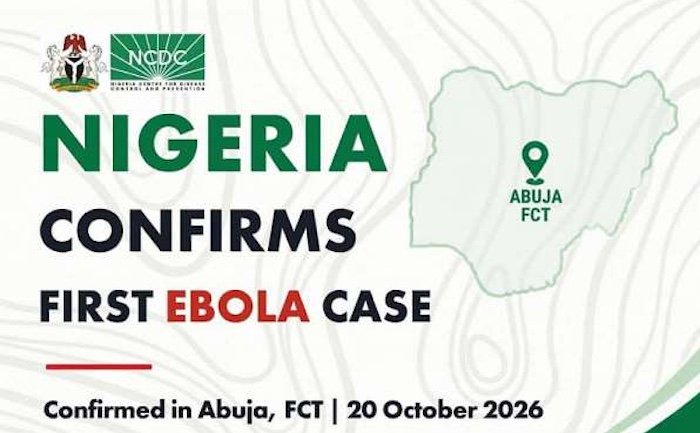
Nigeria’s Coordinating Minister of Health and Social Welfare, Professor Muhammad Pate, had earlier announced the reported confirmation of an Ebola case in the Federal Capital Territory.
According to the account attributed to the minister, the patient had recently returned from Uganda before receiving medical attention at a private hospital in Abuja.
She reportedly spent several days receiving treatment before health officials identified the infection.
Following the diagnosis, the woman was transferred to a designated isolation facility for specialised medical care.
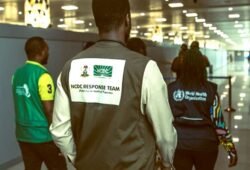
Meanwhile, Nigerian health authorities have reportedly commenced an extensive contact-tracing exercise to identify individuals who may have been exposed.
The operation involves the Federal Ministry of Health, the Nigeria Centre for Disease Control and Prevention and the FCT Health and Environmental Services Secretariat.
According to the report, 44 close contacts have been identified, including healthcare workers, caregivers, fellow patients and individuals associated with the woman’s travel.
The identification of these contacts is intended to support medical monitoring and help authorities assess possible transmission risks.
Health institutions and port health surveillance units across Nigeria have also reportedly been placed on heightened alert as part of the emergency response.
The latest disclosures highlight the importance of establishing an accurate travel timeline, particularly when investigating a suspected imported infectious disease.
However, the competing accounts concerning the patient’s movements and possible place of infection remain unresolved.
Independent confirmation of the reported Ebola diagnosis, flight details and official contact-tracing figures was not available from the supplied account.
Further clarification from Nigerian and Ugandan health authorities would be necessary to establish the infection’s origin and provide a complete account of the reported public health response.
Ezeana Emmanuel