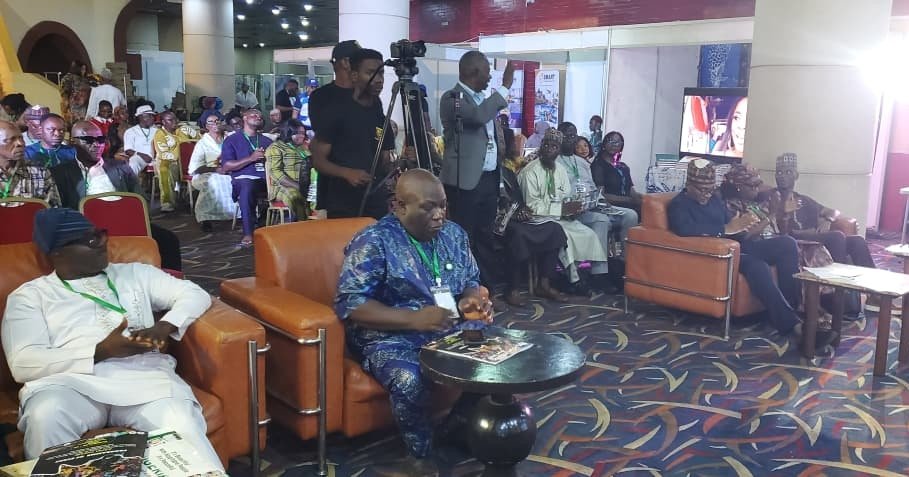
Participants at the Infrastructure Summit on Domestic Tourism Development have called for closer coordination among transport, tourism and regulatory agencies to improve visitor experiences and strengthen Nigeria’s tourism industry.
The summit, held under the Welcome to Nigeria Expo 2026, examined how transport technology, infrastructure investment, fair charges and simpler travel procedures could support tourism growth.
Panellists, which included Ambassador Isa Sago, Isubayangwa, representing the Director General of Nigerian Ports Economic Regulatory Agency (formerly Nigerian Shippers Council) and Mr. Wickhorse, a retired director of the Federal Ministry of Arts, Culture, Tourism and Creative Economy, identified fragmented institutional responsibilities as a challenge, urging relevant agencies to align their operations and reduce duplicated processes encountered by travellers. They emphasised that efficient movement across road, rail, maritime and air transport networks was essential to making tourism destinations more accessible.
During the discussion, the Nigerian Institute of Transport Technology outlined its research and consultancy activities across the four transport modes. The institute explained that its work supports government agencies and private businesses in developing mobility solutions, with implications for domestic tourism and commerce.
It also highlighted its involvement in vehicle conversion to Compressed Natural Gas as part of efforts to promote more sustainable transport.
On digital infrastructure, the institute reported that it had secured a 20-year concession to develop and operate a smart regional transport databank. The proposed platform would integrate information across transport modes and provide electronic access to support planning and operational efficiency.
The discussion also addressed economic regulation at ports, particularly tariff administration, operational standards and protection against arbitrary charges.
Participants were told that presidential assent to the relevant enabling legislation had strengthened the port economic regulator’s authority to sanction non-compliance. Passenger terminal charges were identified as an area requiring oversight because excessive or unpredictable fees could discourage tourism and trade.
The session highlighted complaint-handling mechanisms and the role of border information officers in guiding cross-border travellers and traders. These officers, participants heard, help resolve disputes and provide information, although their responsibilities do not extend to border enforcement.
Beyond Nigeria, panellists raised concerns about visa fees and exit charges at some African borders, describing them as obstacles to tourism and business travel. They called for greater policy harmonisation to support easier movement and the objectives of the African Continental Free Trade Area.
Workforce development also featured in the discussion. NITT outlined training opportunities ranging from certificates and advanced diplomas to postgraduate programmes in transport and logistics, including master’s degree programmes offered in collaboration with Ahmadu Bello University.
Practical programmes in truck driving and transport mechatronics were presented as measures to address skills shortages and improve transport services.
Panellists proposed developing a position paper advocating stronger integration among agencies responsible for infrastructure and tourism development. They stressed that coordinated policies, accessible transport and streamlined visitor processing would be necessary to translate infrastructure improvements into sustained tourism growth.
Ezeana Emmanuel