


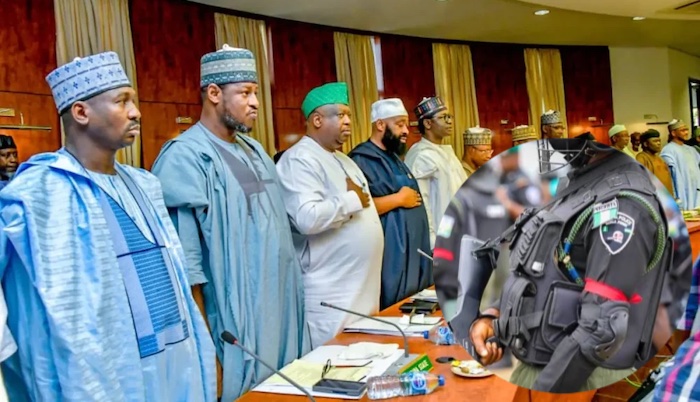
Nigeria’s long-debated move towards the establishment of state police appears to be gaining significant traction, with governors across the 36 states expressing readiness to support the constitutional process needed to bring the initiative to life.
Ekiti State Governor, Biodun Oyebanji, disclosed that state governors were united in their support for the proposed policing structure and would ensure a speedy legislative process once the constitutional amendment bill is transmitted to state Houses of Assembly.
Speaking after presenting his Certificate of Return for a second term to President Bola Tinubu at the State House in Abuja, Oyebanji said the states were prepared to move swiftly on the proposal.
According to him, discussions on state policing had already taken place at the National Economic Council, with most states submitting positions in favour of decentralising the nation’s policing system.
“We are ready for state police. The governors have made up their minds that they are going to give it speedy approval so that implementation can begin,” he said.
Also speaking on the matter, Senate Leader Opeyemi Bamidele described state police as an unavoidable response to the country’s evolving security challenges, insisting that the conversation had moved beyond politics.
Bamidele said the increasing complexity of insecurity across the country had made it necessary to explore a policing framework that would allow states to play a more active role in maintaining law and order.
“It is a child of necessity. It is no longer about political interests. There is a general consensus that there is a need for it,” the Senate Leader stated.
Addressing concerns that state governors could abuse the proposed security outfit for political purposes, Bamidele assured Nigerians that lawmakers were already building safeguards into the constitutional amendment process.
He acknowledged that fears surrounding possible misuse were legitimate but maintained that the National Assembly was taking them seriously by developing legal mechanisms designed to prevent or minimise abuse.
According to him, additional safeguards would be captured in subsequent amendments to the Police Act, which would provide operational details that may not be accommodated within the Constitution itself.
The Senate Leader noted that the broad support being expressed by governors reflects a growing national consensus on the need to decentralise policing and strengthen local security responses.
Nigeria has for years witnessed increasing calls for state police from security experts, traditional rulers, civil society organisations and political leaders who argue that a centrally controlled police system has struggled to effectively address diverse security threats across the country’s vast geographical landscape.
If approved by the National Assembly and ratified by the required number of state legislatures, the development could mark one of the most significant security reforms in Nigeria’s democratic history.