

The Equipment Leasing Registration Authority (ELRA) and the National Agricultural Development Fund (NADF) have signed a Memorandum of Understanding (MoU) aimed at expanding access to agricultural machinery through structured leasing arrangements for farmers across Nigeria.
The agreement, signed in Abuja on Tuesday by ELRA Registrar/Chief Executive Donald Wokoma and NADF Executive Secretary/Chief Executive Mohammed Ibrahim, seeks to enhance food security by making essential equipment such as tractors, harvesters, irrigation systems, and processing machines more accessible to smallholder farmers, cooperatives, and agribusinesses. ELRA’s Head of Media and Corporate Communication, Adebola Sunday, said in a statement on Wednesday that the partnership establishes a robust framework for various leasing models, including finance leases, operating leases, and lease-to-own options under the Equipment Leasing Act.
Wokoma explained that the collaboration will directly address long-standing financing constraints hindering agricultural mechanisation while encouraging greater private sector participation. Under the deal, ELRA will register lease agreements, maintain comprehensive records, develop tailor-made models for the agriculture sector, and ensure full regulatory compliance. NADF, on its part, will provide advisory support and capacity-building programmes for stakeholders. The initiative will bring together financial institutions, equipment manufacturers, leasing companies, development partners, and state governments. The MoU is set to run for an initial four years, subject to renewal.
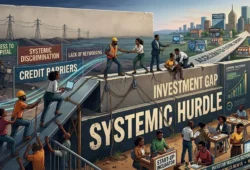
Nigeria’s agriculture sector continues to face significant mechanisation gaps, which contribute to low productivity, especially among smallholder farmers who dominate the industry. This partnership is expected to promote sustainable mechanisation, increase output, reduce post-harvest losses, and ultimately improve national food security. The move aligns with broader government efforts to modernise farming practices and enhance efficiency through innovative financing mechanisms amid ongoing economic reforms. Analysts view the collaboration as a positive step towards transforming Nigeria’s agricultural landscape, potentially boosting GDP contribution from the sector and creating more rural employment opportunities. Successful implementation could serve as a model for other critical sectors requiring heavy equipment financing.