


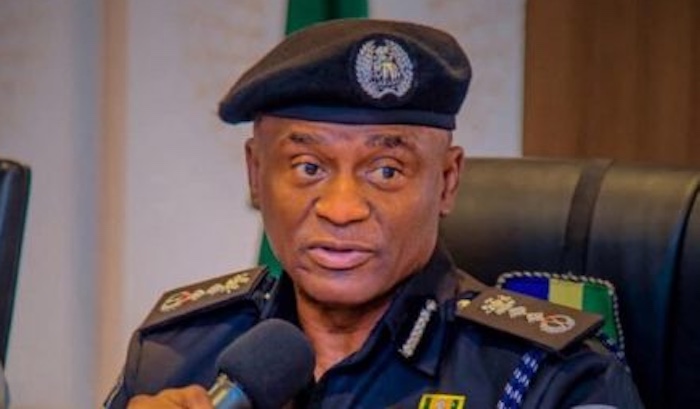
Political violence in Nigeria no longer requires a physical gathering to take hold, according to Inspector-General of Police Tunji Disu, who told a youth security dialogue in Abuja on Thursday that a smartphone alone is now enough to spark it. “It can begin on a smartphone,” he said, pointing to misinformation, deepfakes, coordinated online attacks, and impersonation as threats capable of inflaming tensions well before anyone sets foot on the street.
That warning came during the National Youth Leadership and Security Dialogue, organized by the Nigeria Police Force as part of activities marking 2026 International Youth Day, and it sat alongside a more traditional message: a direct caution to politicians against recruiting young Nigerians as instruments of electoral violence. Disu made clear that police involvement in securing the 2027 elections would not extend to shielding anyone caught intimidating voters, wielding weapons, or destroying property. “We will protect the integrity of the electoral environment,” he said. “But let me be equally clear, we will not protect violence.”
Much of his address was directed squarely at political leaders rather than the young people they’ve historically mobilized. Disu urged politicians across party lines to stop funding or arming youths for political ends, framing the practice as one that exposes young Nigerians to lasting criminal consequences long after any election cycle ends. “Do not recruit our young people to fight your political battles. Do not arm them. Do not finance violence. Do not incite them against their fellow citizens,” he said, adding a pointed warning against politicians who promise protection to those they’ve encouraged to break the law. “Do not encourage them to commit crimes today and promise to protect them tomorrow.”
Underlying that appeal was a broader argument about what’s actually at stake generationally. Disu framed electoral violence as a direct threat to Nigeria’s future rather than a contained political tactic, arguing that the country’s long-term security depends on the same young population that violence often ends up consuming. “Nigeria cannot build a secure and prosperous future by destroying the generation that is expected to inherit that future,” he said.
Returning to the digital threat he’d opened with, Disu closed by placing responsibility directly on young Nigerians themselves, framing online conduct as an extension of civic duty rather than a separate, lower-stakes space. Hate speech, cyberbullying, and unverified allegations, he said, don’t stay contained online. They can damage reputations, provoke real-world violence, and erode public trust in democratic institutions over time. “To every young Nigerian holding a smartphone, I say: your digital footprint is part of your citizenship,” he said. “Before you forward a message, verify it. Before you publish an allegation, establish the facts.”