


Africa is losing tens of billions of dollars that could have been channelled into roads, hospitals, power projects and industrial growth, not because of poor performance alone, but due to what experts describe as exaggerated perceptions of risk by international investors and credit-rating agencies.
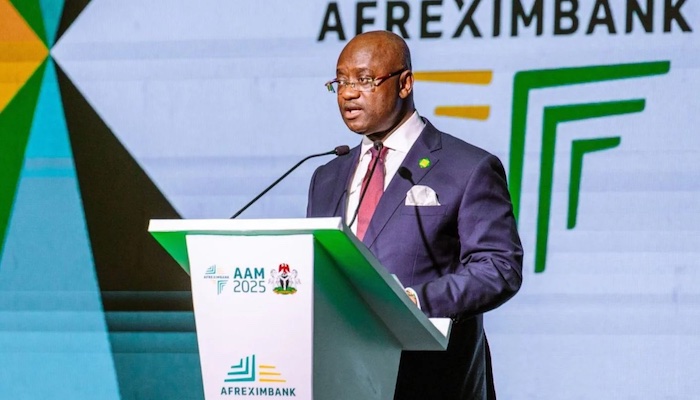
This concern came to the fore at the 2026 Invest Nigeria Conference and Expo in Lagos, where the African Export-Import Bank (Afreximbank) revealed that African countries collectively lose an estimated $74.5 billion annually in additional debt-service costs as a result of high-risk classifications that often fail to reflect the continent’s actual economic realities.
Speaking at the event, Afreximbank’s Director of Regional Operations, Kudawashe Matereke, argued that Africa continues to pay significantly higher borrowing costs despite maintaining stronger repayment records on infrastructure loans than several other developing regions.
According to him, studies by Moody’s Analytics indicate that Africa records a lower default rate on infrastructure loans compared to many regions often perceived as less risky by international markets. The report showed that Africa’s average default rate stands slightly above 1.9 per cent, compared to 4.6 per cent in Asia, 10 per cent in Latin America and 12.4 per cent in Eastern Europe.
Matereke noted that the mismatch between actual performance and investor perception continues to impose heavy financial penalties on African economies.
“Africa loses an estimated $74.5 billion in additional debt-service costs due to exaggerated risk perceptions and biased credit ratings,” he said.
He explained that even a modest reduction in borrowing costs could translate into substantial savings. According to him, reducing borrowing rates by just two percentage points across a portfolio worth $18.6 billion over three years could save the continent approximately $1.12 billion.
The issue of attracting investment was also linked to regional trade integration. Olivier Buyoya, Division Director for West Africa at the International Finance Corporation (IFC), observed that Africa still trades relatively little within its own borders. He noted that only about 16 per cent of African exports were destined for other African countries by the end of 2025, compared with 67 per cent in Europe and 63 per cent in Asia.
Buyoya said the African Continental Free Trade Area (AfCFTA) presents a major opportunity to change that narrative by creating a larger and more attractive market for investors while helping African businesses expand beyond national borders.
Experts at the conference agreed that correcting misconceptions about Africa’s risk profile and strengthening regional economic integration could unlock billions of dollars in investment, reduce borrowing costs and accelerate development across the continent.