


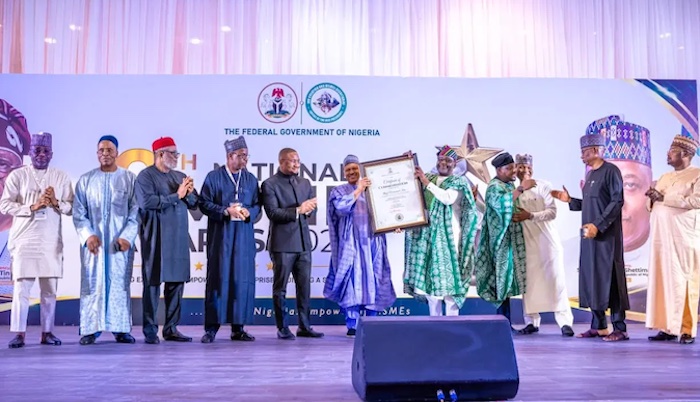
Vice President Kashim Shettima has disclosed that Micro, Small and Medium Enterprises (MSMEs) account for about 90 per cent of businesses in Nigeria and provide employment for more than 60 million people across the country.
Shettima made the disclosure on Saturday while speaking at the National MSME Summit in Abuja, where government officials, business leaders, development partners and entrepreneurs gathered to discuss strategies for strengthening the sector and accelerating economic growth.
The Vice President described MSMEs as the backbone of Nigeria’s economy, noting that their contributions extend beyond job creation to innovation, wealth generation and poverty reduction. He said the sector remains critical to the Federal Government’s efforts to diversify the economy and reduce dependence on oil revenues.
According to him, despite their enormous contributions, many MSMEs continue to struggle with challenges including limited access to finance, poor infrastructure, high operating costs, multiple taxation and regulatory bottlenecks.
Shettima said the administration of President Bola Tinubu is implementing reforms and targeted interventions aimed at creating a more conducive environment for small businesses to thrive.
He highlighted initiatives designed to improve access to affordable credit, promote digital transformation, enhance entrepreneurial skills and support market access for small and medium-sized enterprises.
The Vice President stressed that strengthening MSMEs would not only boost productivity but also expand employment opportunities, especially for young Nigerians.
He called on state governments, financial institutions, development partners and the private sector to deepen collaboration in addressing the challenges facing entrepreneurs.
According to him, sustainable economic growth can only be achieved when small businesses are empowered to grow, compete and create value within local communities.
Participants at the summit also discussed policies aimed at enhancing business competitiveness, encouraging innovation and improving access to local and international markets.
Stakeholders expressed optimism that stronger support for MSMEs would help drive inclusive growth and improve living standards across the country.
The summit is expected to produce recommendations that will guide future government policies and programmes targeted at strengthening Nigeria’s MSME ecosystem and positioning the sector as a major driver of economic transformation.