On the midnight of October 1, 1960, a new nation was born.
As the Union Jack was lowered and Nigeria’s green-white-green flag rose into the sky, thousands gathered in Lagos to witness a moment generations had dreamed about. The message was simple but powerful: Nigeria would now determine its own future.
Sixty-six years later, that future is still being written.
For many Nigerians, Independence Day is more than a public holiday. It is a moment to reflect on the country’s journey, its achievements, its disappointments and the enduring hope that continues to define the Nigerian spirit.
A Nation of Great Expectations
At independence, Nigeria was regarded as one of Africa’s brightest prospects.
Blessed with vast natural resources, fertile land and a rapidly growing population, the country entered nationhood with enormous promise. Leaders of the era envisioned a nation that would become a model of prosperity and development on the continent.
Nigeria has indeed recorded significant achievements.
It has produced globally recognised writers, scientists, entrepreneurs, athletes and entertainers. Its film industry, Nollywood, has become one of the largest in the world. Nigerian music dominates charts across Africa and beyond. Nigerian professionals continue to excel in medicine, technology, academia and business in different parts of the world.
The country’s democratic journey has also witnessed progress.
Since returning to civilian rule in 1999, Nigeria has conducted several electoral cycles, experienced peaceful transfers of power between political parties and strengthened democratic institutions, despite persistent challenges.
The Challenges That Remain
Yet, for many citizens, independence remains a promise that has not been fully realised.
Economic hardship continues to affect millions of households. Rising living costs, unemployment, insecurity and inadequate infrastructure remain major concerns.
Across different communities, Nigerians continue to grapple with questions about education, healthcare, electricity, transportation and access to opportunities.
For younger Nigerians especially, the dream of a better future often competes with the realities of daily survival.
These challenges have led many citizens to ask difficult questions about governance, accountability and national development.
But they have also sparked conversations about reform, innovation and civic responsibility.
The Nigerian Spirit
Perhaps one of Nigeria’s greatest achievements cannot be measured by economic statistics or development indicators.
It is resilience.
From economic downturns to security challenges, from political transitions to public health emergencies, Nigerians have repeatedly demonstrated an extraordinary ability to adapt and endure.
In markets, classrooms, farms, offices and small businesses across the country, citizens continue to create opportunities where few exist.
Young entrepreneurs are building technology companies. Farmers continue to feed communities despite challenges. Teachers, healthcare workers, journalists, artisans and countless others contribute daily to the country’s progress.
This resilience has become one of Nigeria’s defining characteristics.
A New Generation, A New Conversation
Today, more than half of Nigeria’s population was born long after independence.
For many young Nigerians, October 1 is not simply about history. It is about the future.
It is about whether the country can provide quality education, decent jobs, security and opportunities for the next generation.
It is about whether institutions can become stronger, governance more accountable and development more inclusive.
It is also about the role citizens themselves must play in nation-building.
Democracy does not end at the ballot box. It thrives when citizens remain engaged, informed and committed to the common good.
Looking Ahead
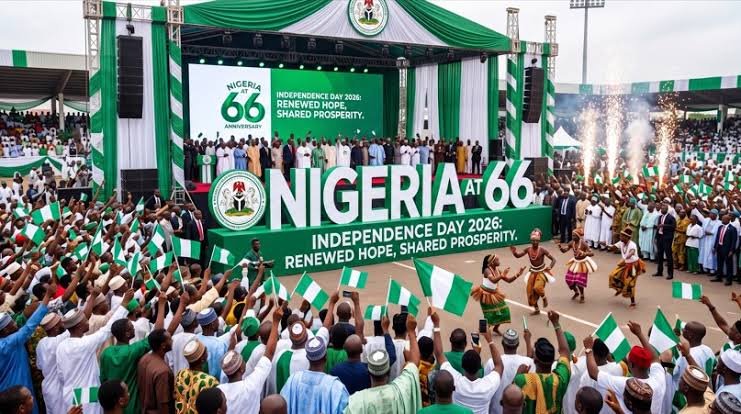
As Nigeria marks its 66th Independence Anniversary, there will be celebrations, speeches and patriotic displays across the country.
But beyond the ceremonies lies a deeper reality.
Nation-building is a continuous process.
The Nigeria imagined in 1960 was never going to be built in a single generation. Every era contributes a chapter to the national story.
The responsibility now rests with today’s leaders, institutions and citizens to write the next chapter.
Despite the challenges, many Nigerians continue to believe in the country’s potential.
That belief is what keeps businesses open during difficult times. It is what drives innovation, inspires community service and motivates millions to keep striving for a better future.
Sixty-six years after independence, Nigeria remains a work in progress.
Its story is unfinished.
And perhaps that is what makes Independence Day important—not merely as a celebration of the past, but as a reminder that the future of the nation is still being shaped by the choices made today.
For all its struggles and successes, Nigeria remains a nation still becoming.