

Nigeria’s import bill for iron and steel products exceeded N1 trillion in 2025, underscoring a persistent industrial paradox. Even with a steel complex large enough to drive economic transformation, the country remains heavily dependent on imported steel.
Data from the National Bureau of Statistics showed that Nigeria’s iron and steel imports averaged about N526 billion annually over the past six years, before rising above N1 trillion in 2025. The figures cover officially recorded imports and exclude possible unrecorded or under-reported trade.
The scale of Nigeria’s dependence is even greater according to the Minister of Steel Development, Shuaibu Abubakar Audu, who has estimated the country’s annual iron and steel import bill at about $4 billion, equivalent to roughly N5.6 trillion.
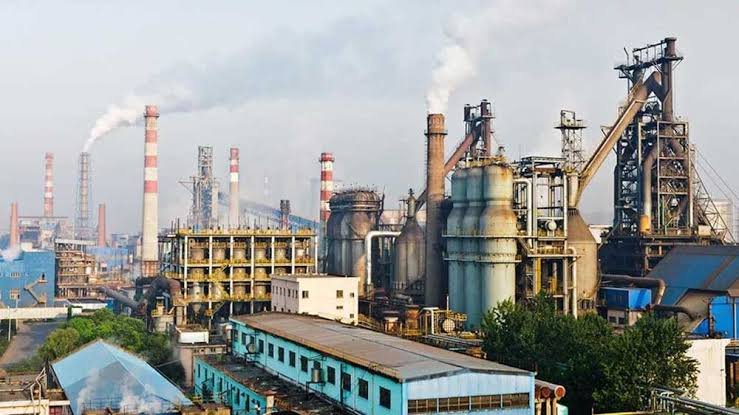
At the centre of the paradox is the Ajaokuta Steel Complex in Kogi State.
Conceived as an integrated metallurgical plant, Ajaokuta was designed to produce up to 5.2 million tonnes of liquid and finished steel annually. Its planned output included heavy plates, flat sheets, wire rods, bars and structural shapes for industries ranging from construction and transportation to manufacturing and defence.
Had the complex become fully operational, analysts argue that it could have reduced Nigeria’s dependence on imported steel, conserved foreign exchange and created hundreds of thousands of direct and millions of indirect jobs.
Instead, the project has remained largely idle for more than four decades.
President of the National Association of Steel Workers, Oyabugbe Sunday, said the situation has left Nigeria exporting raw materials while importing finished products at substantially higher costs.
He estimated that reviving Ajaokuta would require about $1.5 billion, based on the last reported audit of the facility.
Yet the problem has never simply been a lack of attempts.
Successive governments have pursued different arrangements to revive the complex, with several ending in controversy. A 2003 concession to SOLGAS Energy Limited was terminated after the company failed to meet its obligations. A subsequent concession to Global Infrastructure Nigeria Limited, linked to Indian businessman Pramod Mittal, also collapsed amid allegations of asset stripping and failure to provide the required financing.
The dispute that followed dragged on for years and eventually cost Nigeria $496 million in an out-of-court settlement.
Another opportunity emerged in 2019 when Russia offered $460 million in financing and technical assistance to complete the project, while Afreximbank reportedly pledged another $1 billion. The arrangement, however, was never concluded before the Muhammadu Buhari administration left office.
A Presidential Project Implementation Team established in 2020 also failed to deliver the long-promised revival.
Now, the economic cost of the failure is becoming increasingly difficult to ignore.
Nigeria’s continued reliance on imported steel means billions of naira in foreign exchange leave the country each year, while domestic manufacturers remain exposed to international prices and supply disruptions.
The irony is particularly striking because Ajaokuta was designed not merely to satisfy domestic demand but also to supply steel to West Africa and eventually other African markets.
Reviving the complex could therefore transform Nigeria from a major importer into a regional steel producer and exporter.
The project was also a campaign promise of President Bola Tinubu. During the 2023 presidential campaign, Tinubu pledged to revive Ajaokuta and dredge the River Niger to support transportation and logistics for the steel industry.
Three years into his administration, however, the complex remains largely inactive.
The latest import figures have therefore revived an uncomfortable question: how long can Nigeria continue spending billions importing a product it once invested billions to produce at home?