

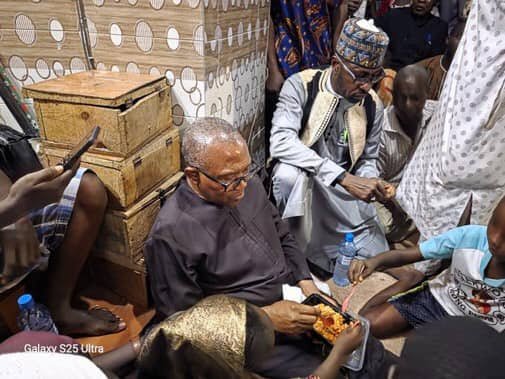
Leaders of the Northern Community in Anambra State have pushed back firmly against allegations that Peter Obi discriminated against northerners during his time as governor, dismissing claims that he ordered the demolition of a mosque as politically motivated fabrications aimed at damaging his standing ahead of the 2027 election.
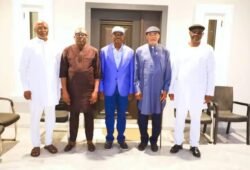
Speaking separately to reporters in Onitsha and Awka, community leaders described a relationship with Obi they characterized as consistently cordial, both during his tenure and in the years since, pointing to tangible benefits including free education, agricultural loans, and Hajj sponsorship that northerners in the state received under his administration. Among those who spoke were Mahmud Ibrahim, Secretary of the Northern Community for Anambra and Delta states; Alhaji Garba Haruna, traditional ruler of the Hausa Community in Awka; and Alhaji Gidado Sidikki, Chairman of the Northern Community in Anambra State.
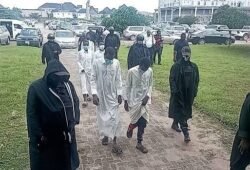
Ibrahim, who said he has served in his secretarial role for decades, directly addressed the mosque controversy, insisting the timeline behind the allegation simply doesn’t hold up. “Our relationship with Mr Peter Obi during his tenure as governor and even now is cordial. We want to make it clear that the rumour that he demolished our mosque while he was governor is untrue,” he said, explaining that the mosque was actually destroyed in February 2006 during a reprisal attack connected to the Sharia crisis, a month before Obi took office in March of that same year. Far from being responsible for its destruction, Ibrahim said Obi personally visited the displaced community at the Army Barracks in Onitsha where they had taken refuge, later escorting them back and contributing financially toward rebuilding the mosque. “So, we do not understand where this story is coming from,” he said.
Ibrahim also rejected a separate allegation that Obi had required northerners to carry identity cards as a condition of remaining in the state, clarifying that the identification system in question was actually an initiative launched by the northern community itself for internal identification purposes, distinct from the broader ANIDS card issued to all Anambra residents regardless of origin, including the governor and his commissioners.
Alhaji Garba Haruna offered a similarly firm rejection of the discrimination claims, saying he never witnessed or heard of any policy under Obi that distinguished between indigenes and non-indigenes. He pointed to direct personal benefits from the administration, including his children’s participation in the free education programme and his own Hajj sponsorship, and noted that Obi has maintained the relationship well beyond his time in office. “He still relates well with us. He comes here for our functions and sends us gifts during Salah celebrations,” Haruna said, adding that former governor Chris Ngige remains similarly close to the community despite no longer holding office or pursuing further political ambitions.
Alhaji Gidado Sidikki spoke from personal experience with Obi’s agricultural loan scheme, recalling that he received N10 million under the programme without any indication of unequal treatment. “The way they gave the loan to me was the same way they gave it to others. There was no discrimination. We are even surprised that before Obi left office, he repaid the outstanding loans on our behalf,” he said. Sidikki also credited the administration’s free education policy with helping his son, who is now pursuing a PhD in China, reflecting on his own four decades in Anambra and the fact that he has raised five university graduates in the state. “So, I cannot say that Anambra has not been good to me,” he said.
Taken together, the leaders argued their firsthand experiences under Obi’s administration directly contradict the allegations now circulating against him, framing the claims as politically driven rather than rooted in fact. They said they intend to mobilize northern community members in Anambra to support Obi once campaigning for the 2027 election formally begins, expressing particular optimism given the anticipated political alliance involving former Kano State governor Rabiu Kwankwaso, whom they described as “our brother.”