

By Deborah Adeyefa
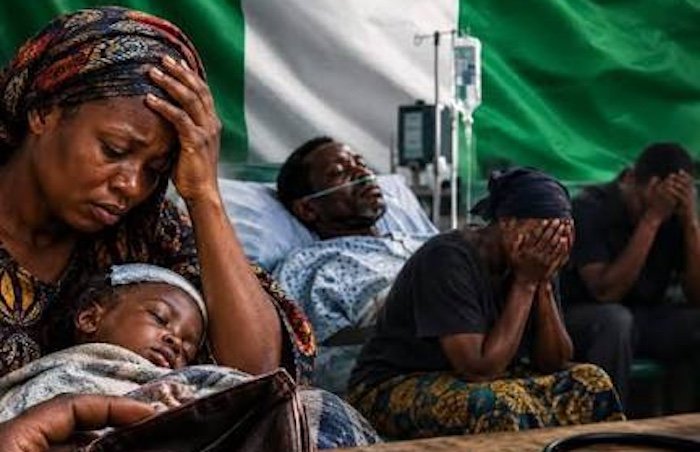
In September 2024, Deborah Ayobakin, a Nigerian woman in her 40s living with a serious heart condition, faced a decision no patient should have to make: remain in hospital and risk a bill she could not afford, or leave before completing the treatment her doctors recommended.
According to a report by BusinessDay published in January 2025, Ayobakin left the hospital after two days because her bill had reached ₦112,000, more than her reported monthly salary of ₦80,000. Continuing her admission for another three days was expected to increase the bill to ₦305,000.
She left without completing the recommended period of hospital care because she could not afford to stay.
Her experience captures a painful reality for many Nigerians: illness is not only a medical challenge. It can become a financial emergency, forcing households to choose between treatment and other essential needs.
For a family without health insurance, substantial savings or access to emergency financial support, the cost of a diagnosis can quickly become the cost of survival.
Nigeria’s healthcare system has undergone policy reforms, funding initiatives and programmes intended to improve access to treatment. Yet high out-of-pocket payments, shortages of health workers and the rising cost of medical care continue to raise questions about how much protection the system offers ordinary citizens.
The central issue is not simply whether hospitals exist. It is whether people can afford to receive the care they need when illness strikes.
When treatment becomes a financial calculation
The pressure is reflected in the cost of healthcare itself.
In February 2026, BusinessDay reported that Nigeria’s health inflation had risen to 28.62 per cent year-on-year, citing National Bureau of Statistics data. The report linked rising medical expenses to pressures on households already struggling with the cost of living.
Health inflation matters because medical treatment is rarely a single purchase. A patient may need consultations, laboratory investigations, medicines, imaging, hospital admission and follow-up care. The combined cost can become considerably greater than the amount initially anticipated.
For people with chronic conditions, the financial burden may continue for months or years. Even when a condition is treatable, the cost of repeated consultations and medication can make consistent care difficult.
The experience of Beatrice Eze, a farmer and petty trader in Abia State, illustrates this problem. A report by BusinessDay in March 2026 said Eze was diagnosed with advanced cataract at the Federal Medical Centre, Umuahia, in October 2025 and was advised to undergo surgery.
The cost of surgery, medication and consultations approached ₦500,000. Without health insurance, she used money from her business and borrowed from family and friends to pay for treatment. Her business was disrupted for weeks while she dealt with her medical needs.
Her story highlights a consequence that can be overlooked when healthcare is discussed only in terms of hospital capacity and medical outcomes: money spent on treatment may also be money removed from a family’s livelihood.
For a petty trader, using business capital to pay hospital bills can affect the ability to restock goods and earn an income. For a salaried worker, medical expenses can consume money intended for rent, food, school fees and transportation.
The financial consequences do not end when a patient leaves the hospital. They may continue through debt repayment, lost earnings and delayed spending on other necessities.
Who pays when illness strikes?
One of the biggest weaknesses in Nigeria’s health financing system is the extent to which patients must pay directly for care.
The World Health Organization reported in 2026 that household out-of-pocket payments accounted for approximately 72 per cent of Nigeria’s current health expenditure in 2023. Such spending exposes households to the risk of catastrophic medical costs, particularly when they have no insurance or other financial protection.
The implication is significant. Instead of contributing regularly to a shared pool that can help cover medical expenses when illness occurs, many households must find money at the point of treatment.
This can create delays. A patient who cannot afford a diagnostic test may postpone it. Someone who cannot pay for prescribed medicine may buy only part of the required treatment or seek cheaper alternatives. A family facing a major surgical bill may have to borrow, sell assets or appeal for public assistance.
These choices can carry serious consequences, although the outcome varies according to the illness, the available services and the circumstances of each patient.
Health insurance is intended to reduce this exposure by pooling financial risks across a group of people. But enrolment alone does not guarantee that every necessary service will be covered or readily available.
A report by Nairametrics in August 2025 documented the experience of Fatima Suleiman, a civil servant in Abuja who expected her health insurance to cover basic laboratory tests and consultations. She was instead asked to pay more than ₦15,000 for services she understood to be covered by her plan. The report also quoted a public hospital matron who described pressure on facilities struggling with limited reimbursements, medicines and operating resources.
Such accounts raise an important question about the quality of financial protection: can patients understand what their insurance covers, and can participating facilities provide the services promised?
For insurance to protect households effectively, benefit packages must be clear, providers must be adequately supported and patients must be able to obtain covered care without unexpected costs undermining access.
The people expected to keep the system running
The financial burden on patients is only one part of the problem. Healthcare delivery also depends on the availability of doctors, nurses, midwives, laboratory professionals and other workers.
The WHO’s Global Health Observatory reports that Nigeria had approximately 3.86 medical doctors per 10,000 people in 2022. A separate presentation of WHO data puts the figure at approximately 4.14 per 10,000 in 2024. These are dated national estimates, not counts of the doctors available in every hospital or state.
The figures illustrate the pressure on a health system serving a large population, but the national average does not reveal the full distribution of the workforce. Access also depends on where professionals work, the facilities available to them and whether patients can afford the services they provide.
In April 2025, The Guardian reported that the Federal Government acknowledged the departure of more than 16,000 doctors over seven years. The report said official records indicated that fewer than 40,000 doctors remained to serve a population of approximately 220 million at the time.
International migration is one factor in the debate over workforce availability, but retaining healthcare professionals also requires attention to working conditions, remuneration, equipment, training and opportunities for career development.
When a facility has insufficient staff or equipment, patients may face longer waits, referrals to other hospitals or additional expenses travelling to obtain treatment. These challenges can be particularly difficult for people in rural communities, where specialist services may be less accessible.
It would, however, be misleading to suggest that every hospital or state faces identical conditions. Nigeria’s healthcare system includes federal, state and local institutions, alongside private and faith-based providers. Resources and service availability vary considerably across locations.
The wider challenge is to ensure that the country’s health workforce and infrastructure are distributed and supported in ways that respond to the needs of the population.
Reforms are underway, but can patients feel the difference?
The difficulties facing patients do not mean that no progress is being made.
The Federal Ministry of Information and National Orientation reported in October 2026 that the Federal Government had revitalised 3,526 primary healthcare centres and counted 14,107 functional clinics nationwide. It also reported that approximately ₦249.5 billion had been disbursed through the Basic Health Care Provision Fund and to primary healthcare centres between 2023 and September 2026. These are government-reported figures and should be assessed alongside independent evidence of service quality and patient outcomes.
Primary healthcare centres are important because they can provide first-contact services, preventive care, basic treatment and referrals. If properly staffed and equipped, they can help patients receive care earlier and reduce the need to travel long distances for services that should be available closer to home.
Maternal healthcare is another area in which targeted interventions have been introduced.
In February 2026, the National Health Insurance Authority announced that its financing intervention for comprehensive emergency obstetric and newborn care had reached more than 32,000 women. The programme includes emergency services such as caesarean sections for eligible vulnerable pregnant women.
These interventions matter because the cost of emergency childbirth can be a major obstacle for families without sufficient financial protection. Expanding access to emergency obstetric care can help reduce the risk that financial constraints prevent women from receiving essential services.
But the number of facilities revitalised or patients enrolled in a programme is only part of the picture. The ultimate test is whether facilities have the staff, medicines, equipment and funding required to provide timely, quality care.
The same applies to health insurance. Enrolment figures are important, but they must be accompanied by evidence that patients can access covered services and that healthcare providers receive adequate support.
The government’s reforms therefore represent important steps, but their long-term impact depends on implementation, monitoring and the extent to which they reduce the financial burden on households.
A health system must protect more than the patient
When a person becomes seriously ill, the consequences rarely stop with that individual. Family members may leave work to provide care, relatives may contribute money, and household savings may be exhausted to pay for treatment.
For families with limited resources, the loss of income can make recovery more difficult even after the immediate medical crisis has passed.
Reducing this burden requires more than building additional facilities. Nigeria needs stronger financial protection, broader and more reliable health insurance coverage, affordable essential medicines, adequately supported health workers and sustained investment in primary healthcare.
It also needs transparent reporting on public spending and service delivery. Citizens should be able to see not only how much money has been allocated to healthcare, but what that money has delivered in terms of accessible services, functioning equipment and better patient outcomes.
The WHO’s evidence on out-of-pocket spending makes the stakes clear: when households finance such a large share of healthcare directly, the ability to obtain treatment remains closely tied to the ability to pay.
Deborah Ayobakin’s experience shows how a hospital bill can exceed a patient’s income and influence decisions about whether to continue treatment. Beatrice Eze’s experience shows how medical expenses can consume business capital and disrupt a livelihood. Their cases are individual accounts, not a complete representation of every Nigerian patient, but they illustrate the human consequences of weak financial protection.
A stronger healthcare system should make treatment accessible before a family reaches the point of selling assets, borrowing heavily or abandoning recommended care because the bill has become unaffordable.
Nigeria has introduced programmes intended to expand primary healthcare and protect vulnerable patients. The challenge now is to ensure that those programmes translate into reliable services and meaningful financial relief.
Because the real measure of a healthcare system is not only whether a hospital can diagnose an illness. It is whether a patient can receive the treatment needed without being forced to choose between getting well and keeping the family financially afloat.