

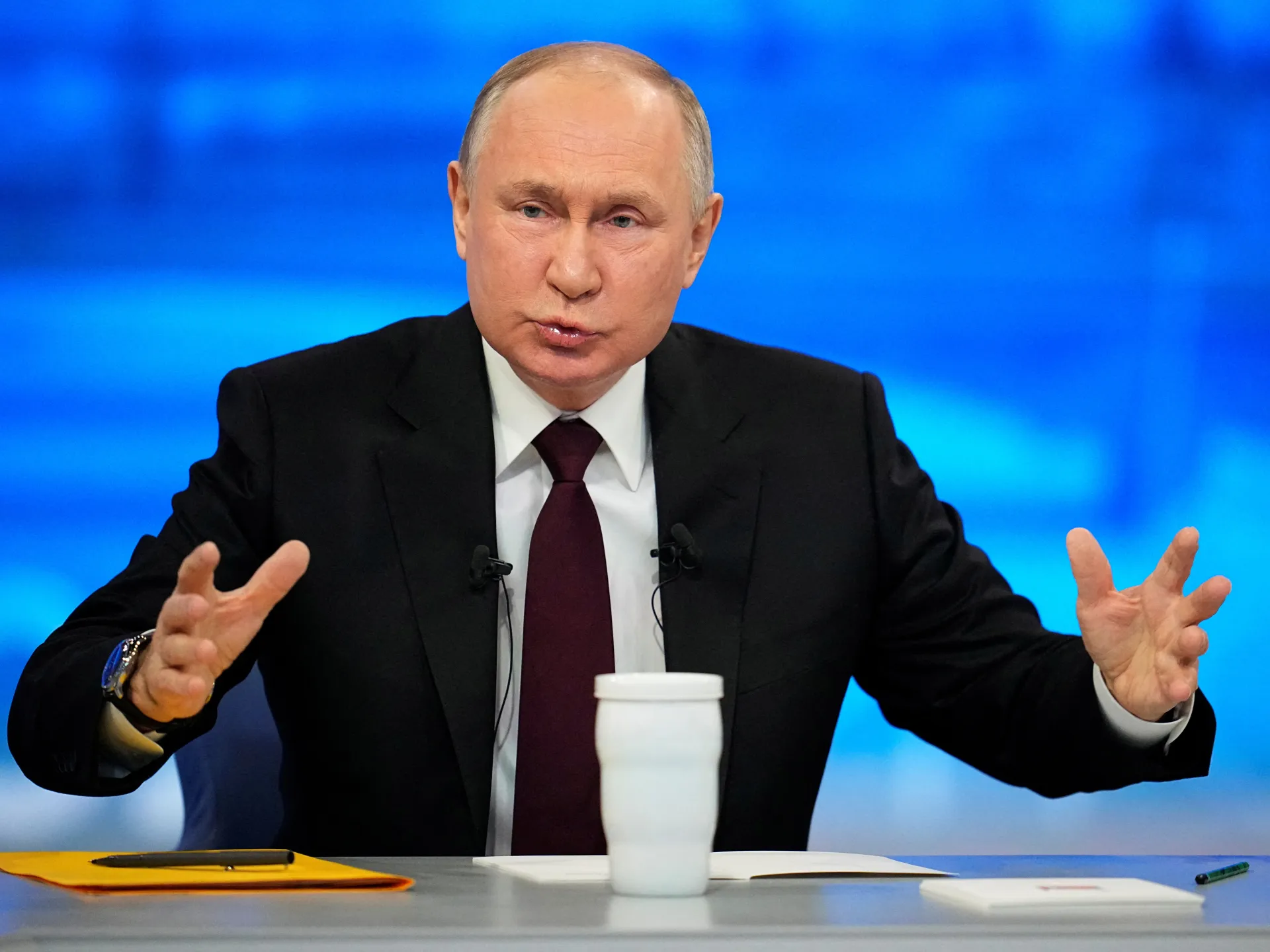
Russian President Vladimir Putin has dismissed speculation that Moscow is preparing another military mobilisation, insisting that the Kremlin currently sees no need to call up additional troops for the war in Ukraine.
Speaking Thursday at the Eastern Economic Forum in Vladivostok, Putin described reports of a possible new mobilisation as an attempt by Ukraine to influence Russia’s upcoming parliamentary elections.
“There is no scenario today that would require mobilisation,” Putin said, accusing the “enemy” of spreading disinformation ahead of the State Duma elections later this month.
The Kremlin has repeatedly rejected suggestions that another large-scale call-up is being prepared. Putin said Russia was continuing to rely on volunteers who enlist and sign contracts with the military.
The issue has nevertheless remained a source of concern in Russia, particularly because the country’s previous mobilisation proved highly controversial.
In September 2022, Putin ordered a “partial mobilisation” following a series of setbacks suffered by Russian forces in Ukraine. The Kremlin said the measure involved 300,000 reservists, despite Russia having a population of roughly 140 million at the time.
The announcement triggered widespread anxiety and prompted many draft-age Russian men to leave the country to avoid being called up.
Ukrainian President Volodymyr Zelensky has continued to warn that Moscow could return to mobilisation. In July, he claimed Russia was preparing for what he described as a “new wave of mobilisation in the autumn”, pointing to heavy Russian losses on the battlefield.
Russia’s military advances have also slowed considerably this year. The widespread use of drones along the front has made large-scale troop movements increasingly difficult, limiting the speed at which either side can achieve breakthroughs.
The Institute for the Study of War, a US-based think tank, said in July that Moscow appeared to be establishing the conditions for another mobilisation. Among the developments it cited was legislation expanding the categories of convicted criminals who can be recruited during wartime.
The think tank also noted that any decision to mobilise would ultimately depend heavily on Putin’s assessment of the battlefield and the stability of his government.
For now, however, Putin insists that such a decision is unnecessary.
With both Russia and Ukraine continuing to suffer heavy military casualties, the question of manpower remains central to the conflict. Whether Moscow can maintain its offensive through voluntary recruitment alone may become clearer as the war continues and battlefield demands evolve.