

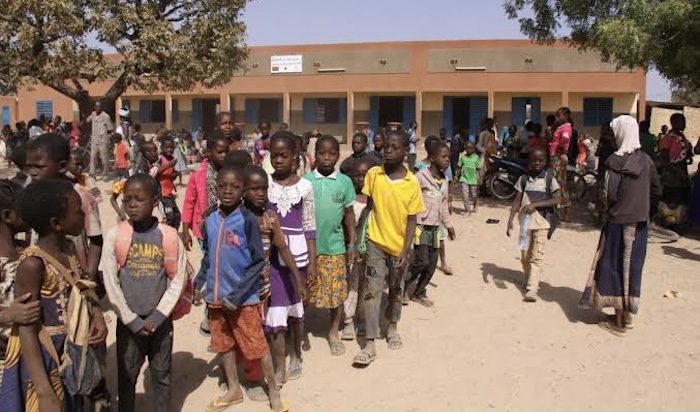
Kano State is Nigeria’s most populous state, home to roughly 15 million people. It is also one of the states with the highest concentration of out-of-school children in a country that already has more children out of school than anywhere else in the world. Nigeria makes up for about one in five of the world’s out-of-school children, and the north-west, where Kano sits, bears a heavy share of that load.
The numbers at the national level are grim. Around 20 million Nigerian children are not in school. In Kano specifically, decades of underfunding, population pressure, barriers to girl-child education, poverty and weak infrastructure have created a learning crisis. Successive administrations have acknowledged but struggled to meaningfully reverse.
That’s the context for the Kano State Government’s new move, working alongside the European Union and UNICEF, has launched the 2026 to 2035 Strategic Education Sector Plan, paired with a three-year operational plan designed to translate the long-term vision into real, trackable action..
UNICEF’s Chief of the Kano Field Office, Karanveer Singh, put it plainly: “In Nigeria, we have a large number of children who are out of school, so we have to get these children back to school. If you really want the country to develop, education is the key.”
The plan is ambitious. Cut the number of out-of-school kids. Raise learning outcomes. Widen access. Reform the whole sector over ten years instead of the short fixes that keep failing. The Governor’s Technical Adviser on Education Reform, Haladu Mohammed, pointed to the “state of emergency” declared in education when Governor Abba Kabir-Yusuf took office as proof the political will is real.
The reassurance that the plan will not be “just on paper” came from a resource person from the National Institute for Educational Planning and Administration, who said the strategy would be doable, scalable and sustainable. That assurance is necessary precisely because Nigeria has a long history of education plans that looked credible at launch and faded quietly in implementation.
What makes this attempt worth watching is the combination of external partners, civil society involvement through the Kano State Accountability Forum on Education, and a stated commitment to grassroots input. Plans built with community voices tend to survive reality better than ones drawn up only from the top.