


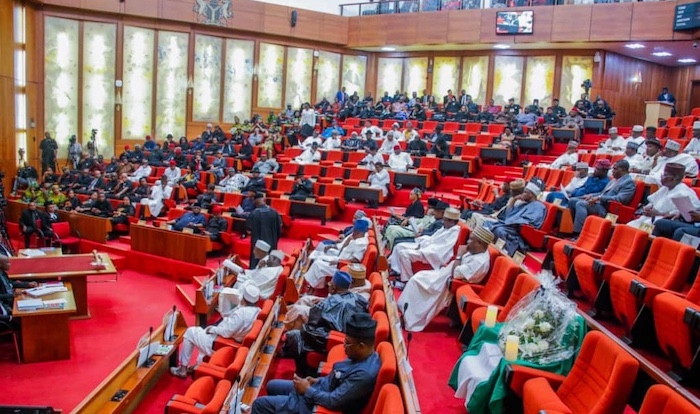
Senate Leader Opeyemi Bamidele has announced plans to sponsor a bill that would introduce a single six-year tenure for the President, state governors, and other elected executive officeholders in Nigeria after the 2027 general elections.
Bamidele made the disclosure during an interview in his office on Tuesday, arguing that the current two-term structure places excessive pressure on leaders and reduces governance efficiency due to constant re-election campaigns and political distractions.
According to him, the idea behind the proposed reform is to allow elected officials to focus fully on governance from the beginning of their tenure without spending time and resources preparing for a second term bid.
“One of the first set of bills that I look forward to moving… is for a bill that will only make it possible for anyone who wants to be president of this country, or governor… to spend only one term of six years,” he said.
He maintained that governance outcomes would improve significantly if leaders are assured of a fixed, non-renewable term, as it would eliminate political survival strategies and encourage long-term planning.
Bamidele acknowledged that the proposal may generate debate within political circles, but insisted that constitutional and governance reforms are necessary for national progress.
He explained that if the bill scales through legislative processes, it would require constitutional amendment by the National Assembly and approval from state legislatures.
The proposal is already generating discussion among political analysts, with supporters arguing that it could reduce election-related tensions, governance disruption, and cost of elections.
However, critics of the single-term system warn that it may weaken democratic accountability, as leaders would no longer face re-election pressure from voters.
The senator noted that similar reform attempts have been made in the past but failed due to political resistance from stakeholders benefiting from the existing arrangement.
He stressed that Nigeria’s democratic system must evolve to reflect current governance realities and improve service delivery.
Observers say the proposal could become one of the most debated constitutional reform initiatives ahead of the 2027 political transition.