


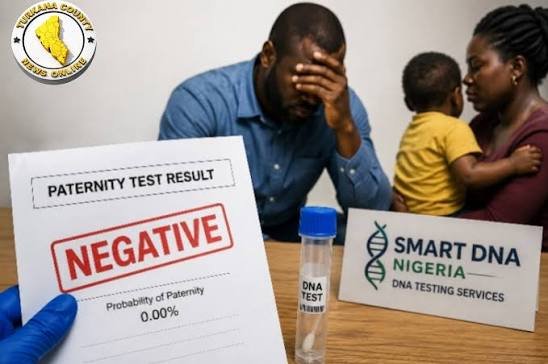
Nearly one in four paternity tests conducted by Smart DNA Nigeria during its 2025/2026 reporting period excluded the tested man as the biological father, highlighting the continued demand for DNA testing among Nigerians seeking answers about parentage.
The laboratory recorded a 23.6 per cent negative-result rate during the period, a slight decline from 24 per cent in the previous reporting period and 26.1 per cent in 2023.
However, the figure should not be interpreted to mean that nearly one in four Nigerian fathers is unknowingly raising another man’s child. Smart DNA’s data cover only people who sought testing at the laboratory and therefore cannot be used as a national estimate.
The distinction is important because people with no doubts about paternity are generally less likely to undergo testing.
Smart DNA Operations Manager, Elizabeth Digia, said many clients approached the laboratory because unresolved questions about biological parentage had become difficult to live with.
“Most of the men and women who come to us are not coming because anyone told them to. They are coming because they cannot live with the question,” she said.
The report showed that men made up 78.6 per cent of first contacts for paternity testing, compared with 15.2 per cent for women. Among classified male records, those aged 41 and above formed the largest group, accounting for 48 per cent, while children aged five and below represented 59.5 per cent of tested individuals.
Firstborn children also featured prominently in the findings. Boys accounted for 56.1 per cent of negative firstborn outcomes, down from about 64.4 per cent in the previous reporting period.
The result could carry particular social significance in Nigeria, where first sons may have important roles in family lineage, inheritance and succession. Questions surrounding their biological identity can therefore extend beyond a couple’s relationship into wider family disputes.
The reasons Nigerians sought DNA testing also shifted during the period. Immigration-related testing declined from 13.1 per cent to 9.7 per cent, while Peace of Mind tests rose from 83.7 per cent to 87 per cent.
The figures suggest that personal concerns over biological parentage now account for the overwhelming majority of the laboratory’s recorded cases.
Yet establishing biological truth can create difficult consequences for families. A negative result may lead to anger, rejection, marital breakdown or emotional distress for children who had no role in the circumstances surrounding their birth.
Experts have consequently cautioned men against directing blame towards children following negative results, stressing that children should not bear responsibility for paternity disputes.
Despite the decline in negative results over three reporting periods, the latest figures show that DNA testing continues to play an increasing role in resolving questions of biological identity in Nigeria.
As access to testing grows, DNA technology is increasingly replacing assumptions based on trust, resemblance and family claims with scientific evidence—although the consequences of that evidence can reach far beyond the laboratory.