

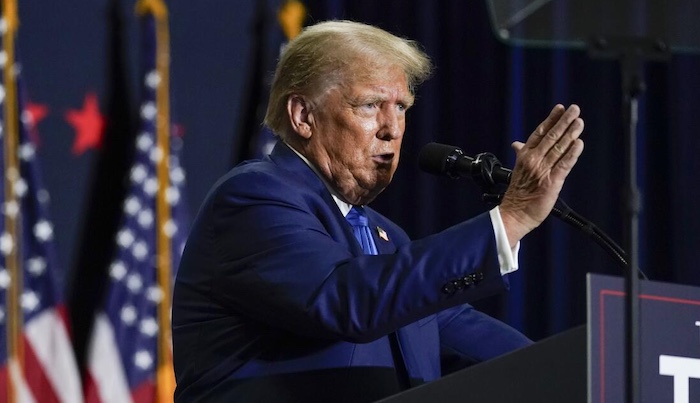
United States President Donald Trump is expected to reaffirm his administration’s commitment to protecting American interests in the Western Hemisphere, including the possible use of military power where necessary, during his address to the United Nations General Assembly.
According to extracts of the speech released by the White House ahead of Tuesday’s address, Trump plans to declare that the United States possesses “unmatched military might” and will not hesitate to defend what it considers vital national interests in Latin America.
The planned remarks form part of a broader foreign policy message focused on security, regional influence and strategic competition within the Americas.
The President is expected to argue that the United States must remain vigilant against threats that could undermine stability in the region or establish a foothold close to American borders.
The speech excerpts also indicate that Trump intends to criticise Cuba, accusing the country of maintaining links with left-leaning political groups within the United States.
The comments are likely to draw attention given the longstanding tensions between Washington and Havana, as well as broader ideological divisions across parts of Latin America.
In addition to his address, Trump is scheduled to hold meetings on the sidelines of the United Nations General Assembly, including discussions with interim Venezuelan leader Delcy Rodriguez.
The meeting is expected to focus on political developments in Venezuela, regional stability and broader diplomatic issues affecting the hemisphere.
The White House also indicated that the President’s speech would address developments involving Iran and ongoing security concerns in the Middle East.
According to the excerpts, Trump intends to reiterate his administration’s position that the United States acted to prevent Iran from obtaining a nuclear weapon following the October 7, 2023 attack on Israel and the subsequent escalation of regional tensions.
Foreign policy analysts say the speech reflects the administration’s effort to project strength on both regional and global security issues while reinforcing its strategic priorities ahead of key domestic political events.
As world leaders continue discussions at the United Nations General Assembly, attention is expected to focus on how major powers intend to address growing geopolitical tensions, regional conflicts and international security challenges.
The address is also likely to generate debate over the balance between diplomacy, deterrence and the use of military power in advancing national interests.