


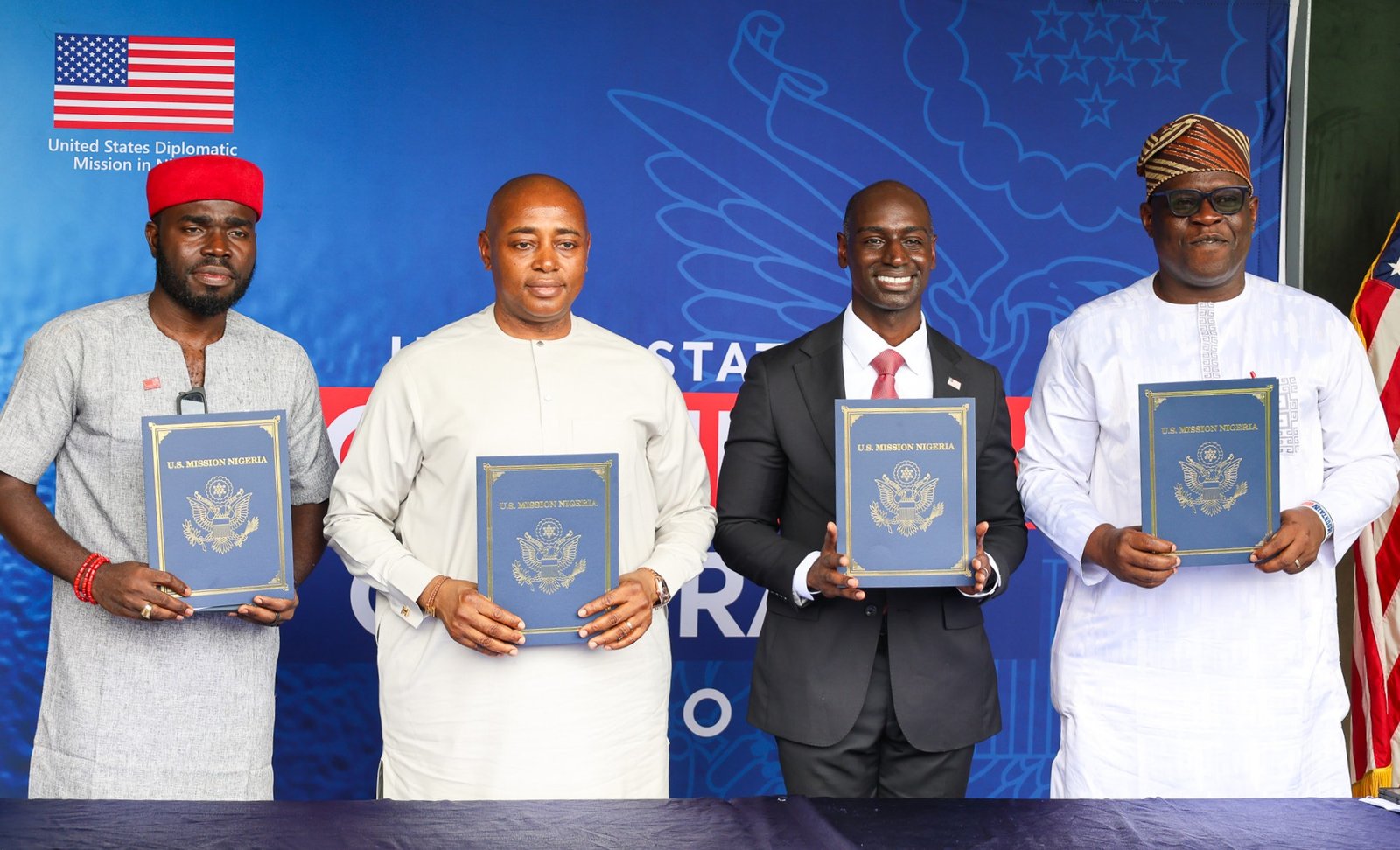
The United States government has awarded a $125,000 grant to support the preservation and
documentation of the historic Lejja Iron-Smelting Site in Enugu State, a landmark
archaeological location believed to date back about 4,000 years.
The grant, provided through the United States Ambassadors Fund for Cultural Preservation
(AFCP), was awarded to the Center for Memories in Enugu for the implementation of the
“Nchekwaba: Lejja Iron-Smelting” project.
The initiative is expected to facilitate the conservation, physical preservation and advanced
digital documentation of the site, which historians and archaeologists regard as one of the
most significant pieces of evidence of early technological innovation in West Africa.
Speaking at the project launch in Lagos, the United States Consul General, Brandon
Hudspeth, described the Lejja Iron-Smelting Site as a symbol of Africa’s rich history of
ingenuity and scientific advancement.
According to him, the site tells a story of innovation and technological sophistication that
dates back thousands of years and deserves global recognition and protection.
Located in Nsukka Local Government Area of Enugu State, the site contains extensive
remnants of ancient iron production, including furnaces, iron ore deposits, tuyere fragments
and large quantities of slag generated during the smelting process.
Research findings published in Heritage Science in 2024 revealed that iron-smelting
activities were carried out continuously in the area for more than 2,000 years, making it one
of the most important archaeological sites in Nigeria.
The project will utilise modern technology, including three-dimensional digital mapping and
documentation, to create a permanent record of the site while supporting ongoing
conservation efforts.
Implementation of the project is being led by the Center for Memories under the leadership of
United States exchange programme alumnus, Iheanyi Igboko.
Enugu State Deputy Governor, Ifeanyi Ossai, who represented Governor Peter Mbah at the
launch, described the grant as a significant milestone for cultural preservation in the state.
He disclosed that the state government is already preparing legislation that will provide a
legal framework for the protection, management and administration of the archaeological
site.
Stakeholders believe the project will not only preserve an important aspect of Nigeria’s
cultural heritage but also boost historical research, tourism and public awareness about the
country’s ancient technological achievements.