


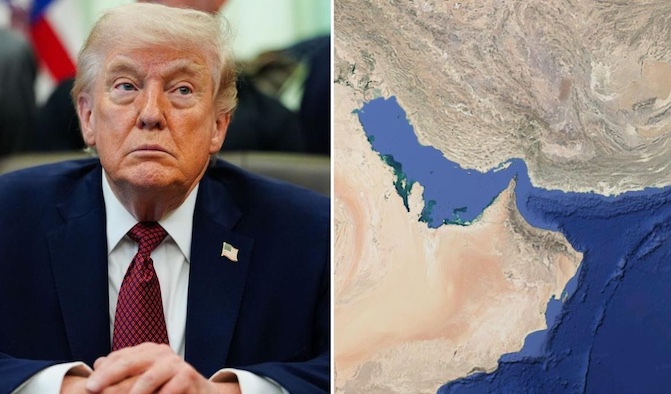
Fighting between the United States and Iran intensified on Monday, with fresh strikes exchanged on both sides and the American death toll in the renewed conflict climbing to three, even as attacks on shipping in the Strait of Hormuz continued to disrupt one of the world’s most critical oil transit routes.
Global oil markets felt the impact almost immediately, with Brent crude climbing above $91 a barrel, its highest level since June 11, as the two nations continued their standoff over control of the strait. The waterway has been central to the conflict since fighting began on February 28, with Iran responding to hostilities by striking American allies and military assets across the region while effectively choking off a passage that once carried roughly a fifth of the world’s oil supply.
Hopes for a near-term resolution took a hit after a preliminary deal aimed at ending the war fell apart, with both sides unable to break their deadlock over the strait. Iran’s Revolutionary Guards reported Monday that two oil tankers attempting to pass through the waterway had exploded and been halted, according to state-affiliated Tasnim news agency. Separately, the UK Maritime Trade Operations agency said a vessel was on fire in the strait, citing military sources, though the cause of that fire has not yet been confirmed.
The renewed violence has prompted growing calls from Washington for international support. Secretary of State Marco Rubio told reporters Sunday that elements within Iran appear determined to use control of the strait as leverage over the rest of the world, and argued that other nations need to start contributing resources, whether equipment or funding, to help protect global shipping rather than leaving the burden solely to the United States.
A fragile truce between the two countries collapsed following reports of Iranian attacks on vessels in the strait, though Rubio maintained that diplomatic efforts remain ongoing. US Central Command confirmed it completed a ninth consecutive night of strikes against Iranian targets over the weekend, describing the operations as aimed at limiting Iran’s capacity to threaten commercial vessels and civilian sailors moving through the strait.
The latest fatalities emerged from a violent weekend that saw CENTCOM report three new American military deaths and one service member listed as missing. Two service members were killed in Iranian missile and drone strikes on Jordan Friday, while a third died in northern Iraq during a controlled detonation of unexploded ordnance from a downed Iranian drone. President Trump said Sunday that recent American strikes on Iran had hit hard, framing the operation as a response honoring the fallen. The latest deaths bring the confirmed American military fatality count since the conflict began to 17. Iran’s health ministry reported separately that 50 people had died and more than 500 were wounded in recent fighting on its side.
Beyond the strait, Iran’s Revolutionary Guards said they struck targets overnight in Syria, Jordan and Kuwait, claiming hits on a special operations command center near Al-Tanf in Syria, military aircraft at Aqaba Airport in Jordan, and an early-warning radar system in Kuwait. Kuwaiti forces said they were actively responding to drone attacks following the reported Iranian aggression, while Bahrain’s interior ministry confirmed air raid sirens had sounded, urging residents to seek shelter.
On the diplomatic front, Rubio said Sunday that Tehran cannot expect a memorandum of understanding signed last month to remain viable while continuing to violate its terms, though he reiterated that the United States remains open to a genuine diplomatic resolution if Iran proves willing to abide by one. He made the comments ahead of travel to the Philippines for a meeting of foreign ministers with the Association of Southeast Asian Nations.