

Several American cities that staged matches at the 2026 FIFA World Cup say they’re still waiting on millions of dollars in funding FIFA reportedly promised but has yet to deliver, a dispute rooted in a commitment that traces back to the previous year’s Club World Cup.
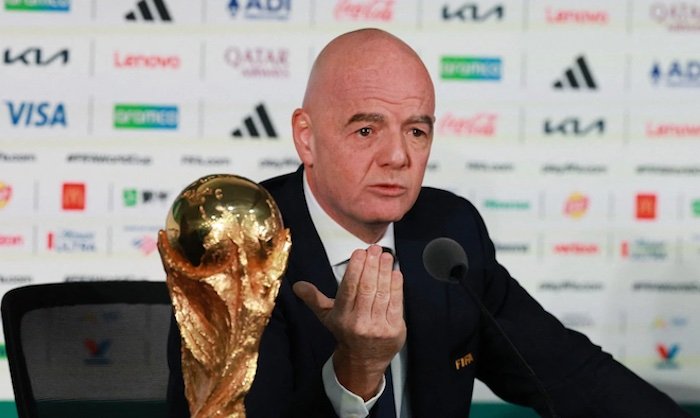
The origins of the disagreement lie in comments FIFA President Gianni Infantino made ahead of the 2025 Club World Cup, also hosted in the United States, when he announced that each of the tournament’s 11 host cities would receive a $1 million “legacy contribution” intended to fund mini-pitches and community projects. Once cities selected for the far larger 2026 World Cup saw that commitment, they reportedly began asking whether a similar payment would apply to them as well, given the significantly greater scale and expense of hosting the bigger tournament.
According to four executives involved with US World Cup host city committees, who spoke on condition of anonymity, senior FIFA officials repeatedly assured them verbally, across multiple meetings, that the same $1 million contribution would be extended to World Cup host cities too. That assurance, however, was never made publicly by FIFA, and according to the executives, the payments still haven’t materialized for the 11 host cities involved: Seattle, the San Francisco Bay Area, Los Angeles, Dallas, Houston, Kansas City, Atlanta, Philadelphia, New York/New Jersey, Miami, and Boston.
The delay is creating practical complications beyond simple frustration. Some host committees are already in the process of winding down operations now that the tournament has concluded, raising questions about which entity would even be positioned to receive and administer the funds if they do eventually arrive. Others are currently preparing financial reports for local and state authorities and remain unsure whether to include the anticipated FIFA contribution in their accounting at all, given the uncertainty around timing.
FIFA declined to comment when approached by The Athletic about the situation.
For some involved, the size of the disputed sum only sharpens the frustration. Two host city executives reportedly questioned why FIFA would hesitate over what amounts to a relatively modest payment, particularly given the organisation generated more than $15 billion in revenue across the 2023-26 cycle, against a 2026 World Cup operating budget estimated at roughly $2.7 billion.
The dispute adds to a growing list of pressures facing Infantino, who is separately contending with rising tensions with UEFA and other football governing bodies following the recent collapse of plans to sell a stake in FIFA’s competitions and events to outside investors.