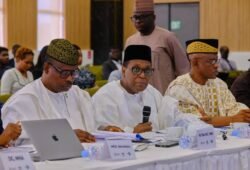


The West African College of Physicians (WACP) has urged government at all levels to strengthen Nigeria’s health system, warning that failure to do so risks worsening the migration of skilled medical professionals, declining service delivery, and mounting pressure on already overstretched hospitals.
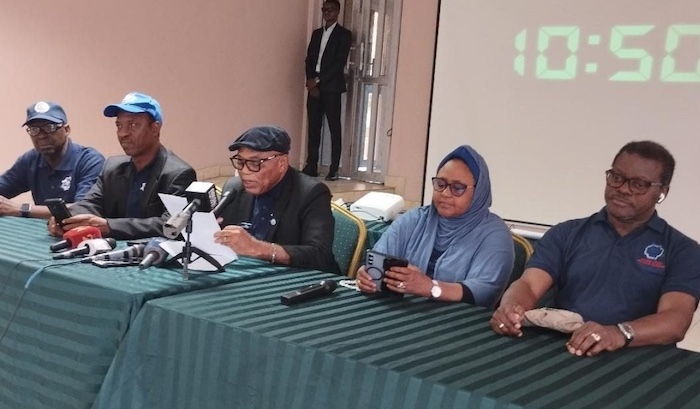
The college made the call at a press conference held at the Theophilus Ogunlesi Hall, University of Ibadan, formally announcing its 50th Annual General and Scientific Conference for the Nigeria Chapter. Beyond the migration warning, WACP flagged broader systemic gaps in governance, funding, workforce retention and healthcare delivery, calling for reforms built around collaboration, innovation and patient-centred care.
Chairman of the Nigeria Chapter and College Vice President, Prof. Benjamin Uzochukwu, argued that Nigeria’s health system problems cannot be solved through restrictive policy alone but require making local practice genuinely attractive, functional and sustainable. He also weighed in on artificial intelligence’s growing role in medicine, saying it has proven valuable for diagnosis but cannot substitute for the human judgment and empathy clinical care demands. “We should not rely solely on artificial intelligence. We must combine it with human intelligence,” he said. “Artificial intelligence will not say, ‘I’m sorry.’ However, a clinician’s empathy can help address the social aspects of a patient’s problem by saying, ‘I’m sorry. How are you doing?’ and so on.”
Uzochukwu was more pointed on the subject of brain drain, describing it as a force actively stripping Nigerian hospitals of experienced specialists, compounded by inflation eroding the real value of healthcare workers’ pay. He was critical of past government attempts to address the problem through restriction rather than incentive, specifically a policy that indirectly limited doctors’ ability to travel abroad for specialist training. “We do not believe that this is the appropriate approach,” he said, arguing instead that curbing brain drain requires building a domestic system robust enough, and well-paid enough, to make leaving less appealing in the first place. “If we strengthen our health system, then anyone who visits a health facility will receive appropriate treatment and quality healthcare services,” he said.
On what that strengthening should look like in practice, Uzochukwu pointed to a longstanding, unmet commitment. “We must allocate at least the agreed 15% of the national budget to health. At present, spending is below 6 percent,” he said, a gap that underscores much of the college’s broader argument that Nigeria’s healthcare challenges are less about policy design than about resourcing.