


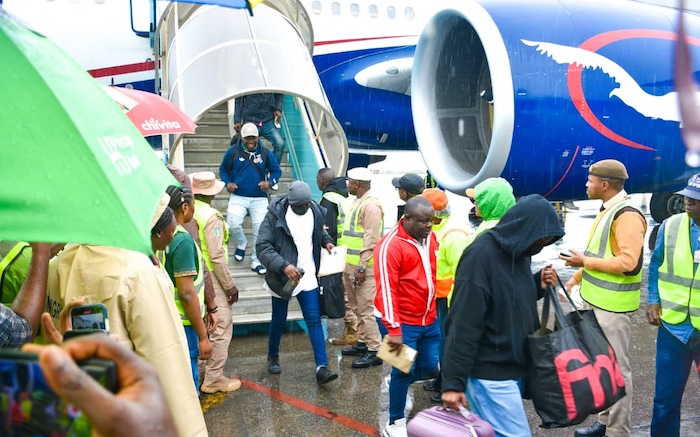
The Nigerian Embassy in South Africa has been overwhelmed as 269 citizens returned home on Wednesday amid rising anti-immigration protests in the country.
The returnees arrived at the Murtala Muhammed International Airport in Lagos on a chartered flight arranged by the Federal Government. Many of the returnees expressed relief at being back home but lamented the loss of properties and businesses left behind in South Africa. The Nigerian High Commission in Pretoria said it was working round the clock to assist citizens wishing to return.
The protests in South Africa have heightened fears for the safety of Nigerians and other African migrants, prompting the Federal Government to issue travel advisories. This latest wave of returns brings to over 1,200 the number of Nigerians who have been evacuated from South Africa in the last three months.
The situation in South Africa has been deteriorating rapidly, with anti-foreigner sentiments leading to attacks on businesses and properties owned by African migrants. Many Nigerians who had built successful businesses over the years were forced to abandon their investments due to the escalating violence. The Federal Government has been coordinating with South African authorities to ensure the safety of its citizens while facilitating the return of those who wish to leave.
The returnees shared harrowing stories of harassment, looting, and threats to their lives. Some described how they had to leave behind years of hard work and savings as mobs targeted foreign-owned shops. The Nigerian government has expressed deep concern over the safety of its nationals and called for calm and dialogue between the South African government and the protesters.
Stakeholders have urged the international community to intervene and address the root causes of xenophobia in South Africa, including unemployment, inequality, and service delivery challenges. The mass return of Nigerians has also put pressure on the government to provide support for reintegration, including skills training and access to micro-credit to help returnees restart their lives.
The incident highlights the broader challenges of migration and integration in the Southern African region. As more Nigerians continue to return, the government is expected to put in place comprehensive support programmes to mitigate the impact on families and communities. The development also underscores the need for stronger diplomatic engagement to protect the rights and interests of Nigerians living abroad.