


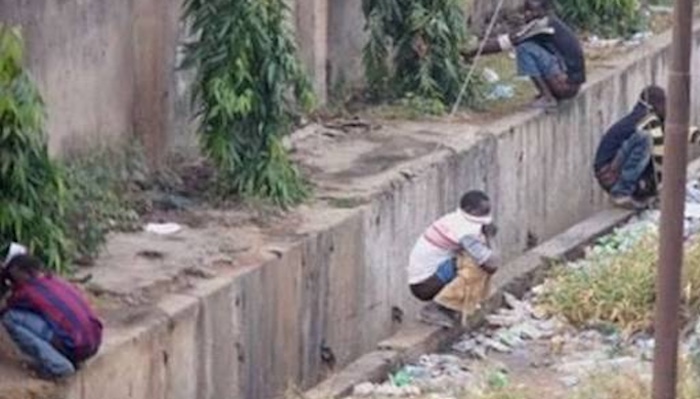
Two South-East cities offer a case study in how sanitation problems evolve rather than disappear. In Onitsha, the disappearance of roadside refuse heaps has been replaced by a rising open defecation crisis. In Enugu, consistent waste evacuation has kept the metropolis largely clean, but even there, one persistent trouble spot exposes the limits of infrastructure without water.
Start with what looks like progress in Onitsha. Refuse dumps that once crowded major roads are thinning out, but not because government waste management has improved. Residents themselves are driving the change, pooling money to hire private evacuators rather than dealing with inefficient government-appointed contractors or the revenue agents who show up to collect sanitation levies. It’s a workaround born of frustration with the system rather than a fix to it, and it comes with its own cost: some residents, unable or unwilling to pay for private evacuation, are instead dumping waste straight into drainage channels, a practice environmental observers warn could worsen flooding.
The more pressing problem in Onitsha isn’t refuse at all, it’s what’s replacing it. Open defecation is spreading across the city and into neighbouring communities, including Nkpor, Ogidi, Obosi, Awada and Nkwelle-Ezunaka, with residents describing gutters and abandoned dump sites as increasingly common places for it to happen. The root cause, as residents tell it, is straightforward neglect: successive governments have failed to build or maintain public toilets in busy commercial areas. Even facilities that once existed, like those in parts of Upper Iweka, have fallen into disrepair and become inaccessible, leaving travellers and residents without functional options nearby.
Enugu tells a different story, at least on the surface. Compactor trucks, smaller collection vehicles and tricycles keep designated dump sites clear and reach inner streets that larger vehicles can’t, and the result is a metropolis with far less overflowing refuse than its neighbour. Public toilets at major markets like Old Park and the Coal Camp Spare Parts Market appear to be doing real work too, residents say the facilities have measurably cut down on open defecation within those markets.
But Enugu isn’t uniformly clean. Parts of Aria Road still struggle with open defecation despite the city’s broader progress, and residents there point to a different culprit than Onitsha’s: it isn’t a lack of toilets, it’s a lack of water to use them. That distinction matters, because it suggests building toilets alone doesn’t solve the problem if the water infrastructure to support them isn’t there too.
Public health experts frame this as the core lesson from both cities: ending open defecation takes toilets, water, waste management and public awareness moving together, not any one piece in isolation. Enugu’s experience proves that investment can transform a city’s sanitation outlook, but even its success has a asterisk. Onitsha’s shows what happens when that investment doesn’t materialise at all.