

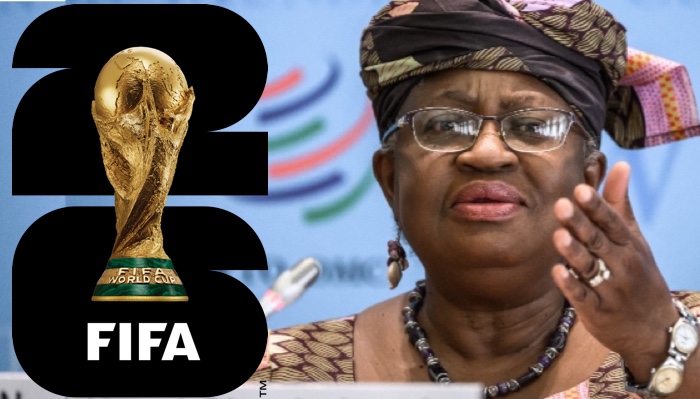
World Trade Organisation Director-General Ngozi Okonjo-Iweala has joined the wave of public commentary celebrating Africa’s showing at the 2026 World Cup, singling out Cape Verde’s run as the continent’s most surprising story of the tournament.
In a post on her verified X account Sunday, Okonjo-Iweala highlighted Morocco and Egypt as the African sides still standing, while reserving special praise for Cape Verde. “So proud of the performance of the African teams at the World Cup! Morocco and Egypt have made it through so far, but Cape Verde was a standout,” she wrote. Cape Verde’s presence at this stage is itself notable, the tiny island nation of roughly half a million people is competing at just its second World Cup appearance, and its progress has been treated as one of the tournament’s feel-good stories precisely because so few expected it from a country with such a small footprint in international football.
Morocco’s advance carries its own weight given recent history. The Atlas Lions became the first African side to reach a World Cup semi-final in 2022, and their continued success this cycle has reinforced their status as the continent’s most consistent modern performer on football’s biggest stage. Egypt, long a dominant force in African continental competitions like AFCON, has had a comparatively harder time translating that success to the World Cup itself, making their run this year a notable step forward.
Okonjo-Iweala also acknowledged DR Congo, Côte d’Ivoire and Ghana for their efforts despite falling short of advancing further. “DRC, Côte d’Ivoire, Ghana also battled. Thanks to all for making us proud. Keeping fingers crossed on further progress!” she wrote.
She closed her post looking ahead to Nigeria’s own World Cup prospects, saying she hoped to see the Super Eagles qualify for the next tournament. “Would be exciting if Nigeria makes it through to the next World Cup,” she wrote, a comment that reflects the broader disappointment among Nigerian football followers over the team’s recent struggles to secure World Cup qualification, despite the country’s status as one of Africa’s traditional football powers.