


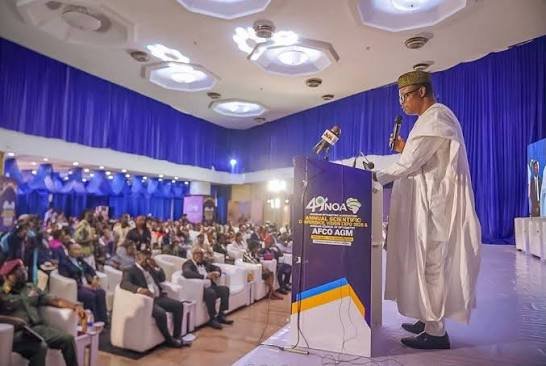
The Federal Government has unveiled an ambitious plan to improve eye health services across Nigeria, targeting the distribution of five million free pairs of spectacles and the provision of 25,000 free cataract surgeries by the end of 2027.
The initiative forms part of broader efforts to reduce preventable blindness and visual impairment among Nigerians, particularly vulnerable groups who often lack access to quality eye care services.
Minister of State for Health and Social Welfare, Dr Iziaq Adekunle Salako, announced the programme during the 49th Annual National Scientific Conference of the Nigerian Optometric Association and the Annual General Meeting of the African Council of Optometry held in Abuja.
According to the minister, eye health remains a critical public health concern, with millions of Nigerians experiencing vision-related challenges that affect their productivity, independence and overall quality of life. He noted that many of these conditions can be prevented or treated through timely intervention and access to basic eye care services.
A key component of the government’s strategy is the expansion of the Jigi-Bola 2.0 initiative, a mobile eye care programme designed to take services directly to communities across the country. Salako disclosed that the programme has already achieved significant milestones, including the screening of nearly two million Nigerians and the distribution of more than 1.3 million free reading glasses.
He further revealed that approximately two-thirds of beneficiaries who received spectacles under the initiative had never previously owned corrective eyewear, highlighting the scale of unmet eye care needs across the country.
The programme is aligned with the National Eye Health Strategic Development Plan 2024–2028, which seeks to strengthen eye care delivery at primary, secondary and tertiary healthcare levels. The government believes that improving access to vision services will contribute significantly to overall health outcomes and economic productivity.
As part of ongoing reforms, the Ministry of Health has introduced the Nigeria Glaucoma Guidelines and Toolkit aimed at standardising the diagnosis, treatment and referral of glaucoma cases nationwide. The ministry has also trained ophthalmologists across all 36 states and the Federal Capital Territory to ensure effective implementation of the guidelines.
In addition, more than 2,200 primary healthcare workers in 16 states have received specialised training to conduct vision screening and facilitate referrals for patients requiring advanced care.
Salako commended optometrists for their contributions to eye health delivery and reaffirmed the government’s commitment to working closely with professional bodies and development partners to expand access to quality vision care.
The government believes the initiative will play a vital role in reducing avoidable blindness, improving early detection of eye diseases and ensuring that more Nigerians benefit from essential eye care services regardless of their location or economic status.