

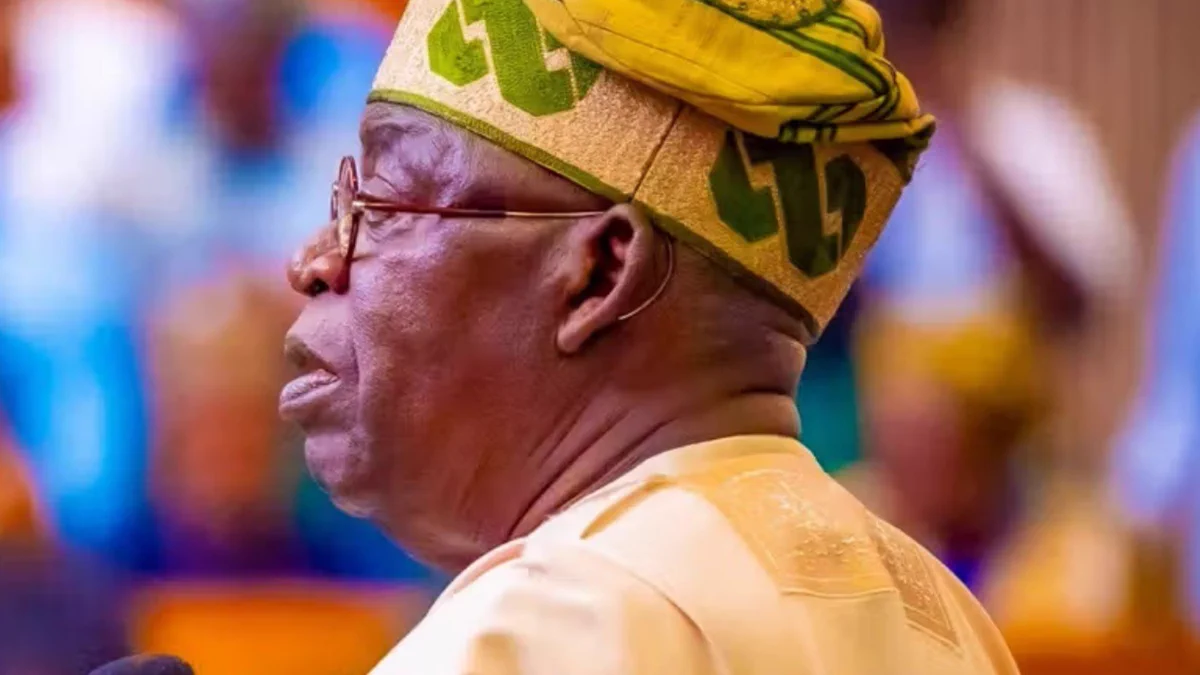
President Bola Tinubu has met with the Chairman of the Economic and Financial Crimes Commission (EFCC), Olanipekun Olukoyede, and the Minister of Housing and Urban Development, Muttaqha Rabe Darma, to strengthen the management and utilisation of assets forfeited to the Federal Government.
The meeting, held at the Presidential Villa in Abuja, focused on ensuring transparency, accountability and effective deployment of recovered properties for public benefit.
The discussion comes as the Federal Government continues to take possession of numerous houses, estates, commercial buildings and parcels of land forfeited through anti-corruption and financial crime proceedings.
According to Presidency sources, the administration is seeking to move beyond simply recovering assets by establishing systems that preserve their value, prevent deterioration and ensure they contribute meaningfully to national development.
A key item on the agenda was the 753-unit housing estate located in the Lokogoma District of Abuja. The estate, which occupies more than 150,000 square metres of land, was finally forfeited to the Federal Government in December 2024 and later transferred to the Federal Ministry of Housing and Urban Development in May 2025.
The property had previously been linked to former Central Bank of Nigeria Governor, Godwin Emefiele, whose other assets in Lagos and Delta states have also been subject to forfeiture proceedings.
The Federal Government’s inventory of recovered properties has expanded significantly in recent years. In January, a court granted an interim forfeiture order over 57 properties estimated at N213 billion in a case involving former Attorney-General of the Federation, Abubakar Malami, and several associates.
Subsequently, 48 of those properties valued at approximately N180 billion were permanently forfeited to the Federal Government, while nine others were released.
Officials noted that the meeting underscored the importance of collaboration between the EFCC, which secures and manages recovered assets, and the Ministry of Housing, which has the technical expertise to complete, maintain and deploy such properties for public use.
The government said the objective is to ensure that recovered assets are not left idle but are converted into tangible benefits that support housing, infrastructure and broader public welfare programmes.