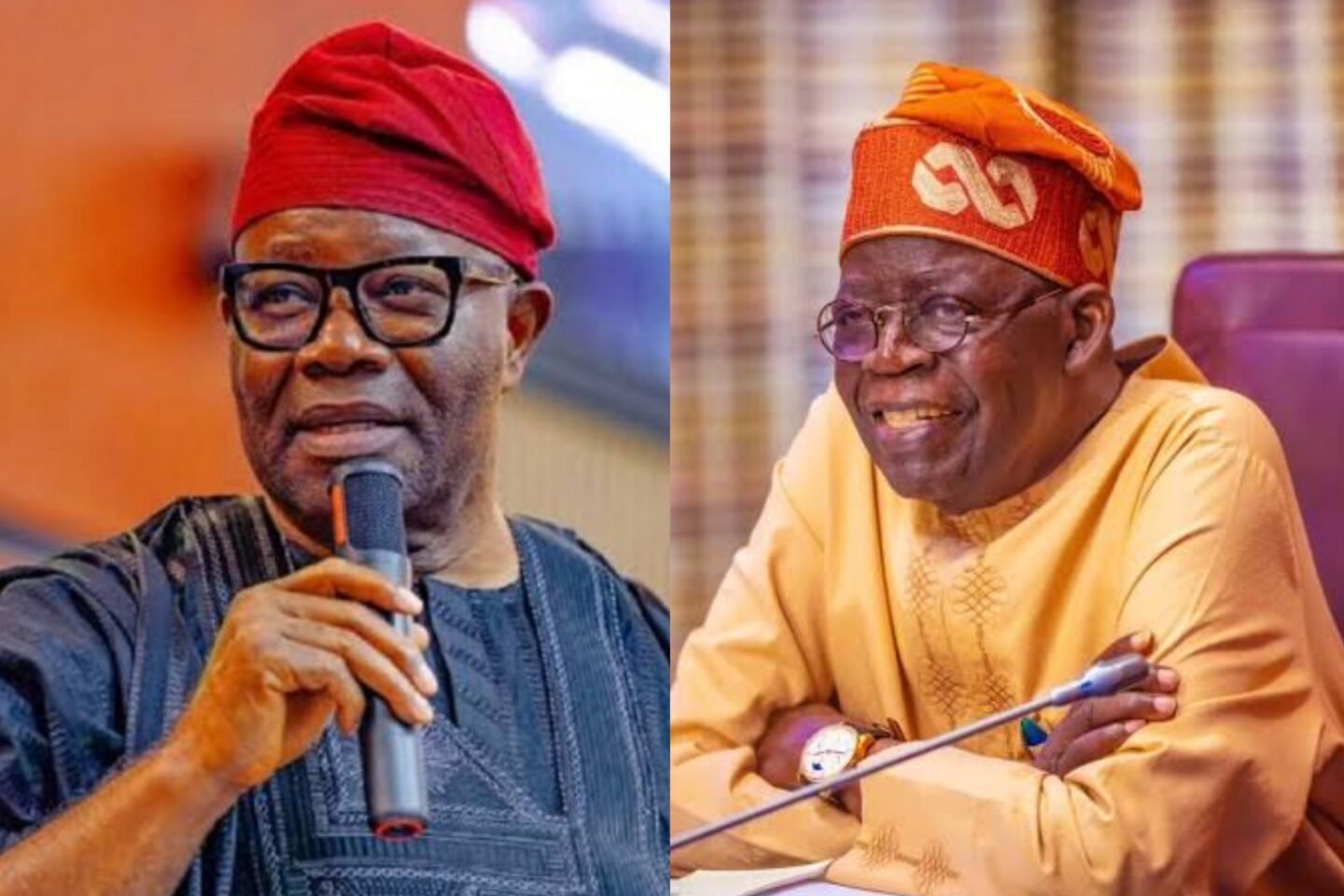
Senate President Godswill Akpabio has dismissed concerns over President Bola Tinubu’s continued stay abroad, insisting that there is no leadership vacuum in the country and that the President remains fully in charge of government affairs despite his extended working vacation.
Akpabio made the remarks during the commissioning of road projects in Akwa Ibom State, amid growing criticism from opposition parties over the President’s prolonged absence and questions surrounding the exercise of presidential powers.
President Tinubu had commenced a three-week working vacation on August 30. The Presidency later announced that the leave had been extended by a few days, with the President expected to return to Nigeria before the weekend.
Addressing the controversy, Akpabio argued that advances in communication technology have made it possible for national leaders to effectively discharge their responsibilities from any part of the world.
He maintained that President Tinubu remains actively involved in governance and continues to oversee government business while away. The Senate President also clarified that he is not serving in any acting presidential capacity, stressing that the constitutional structure of government remains intact.
The President’s absence has, however, drawn criticism from several opposition groups, which have raised concerns about transparency and constitutional procedures.
The African Democratic Congress (ADC) questioned the arrangement, arguing that the simultaneous absence of both the President and Vice-President raises constitutional concerns. The party referenced Section 145 of the Constitution and called for clarity regarding who is currently exercising presidential authority.
Similarly, a faction of the Peoples Democratic Party (PDP) criticised the extension of the President’s leave, describing it as an abandonment of his responsibilities at a time when the country faces significant economic and security challenges.
The Obidient Movement also weighed in on the debate, urging the Presidency to provide further explanations regarding the President’s absence and questioning why he was not attending the ongoing United Nations General Assembly in New York.
While opposition figures continue to challenge the situation, government officials have maintained that there has been no disruption in governance and that constitutional processes are being followed.
The development has renewed public debate over the interpretation of constitutional provisions relating to presidential absence, delegation of authority and continuity of government.
As discussions continue, attention remains focused on the President’s expected return and whether the controversy will trigger further legal or political scrutiny regarding executive authority and succession procedures during periods of absence.