


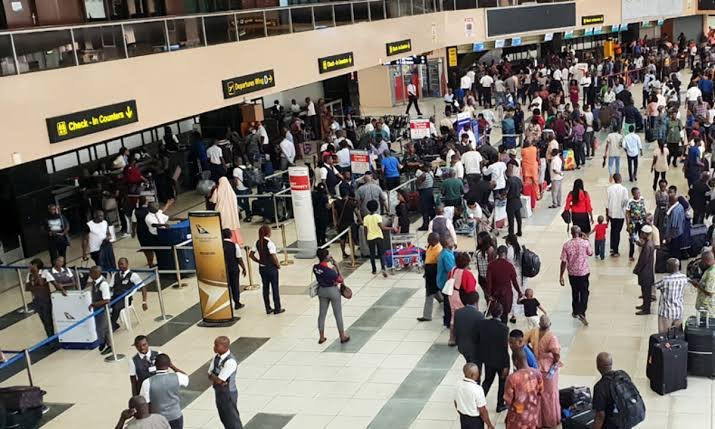
Stakeholders in Nigeria’s aviation industry have called for stronger legal protections for passengers affected by flight disruptions arising from industrial disputes and labour actions within the sector.
The call follows recent disruptions to flight operations caused by aviation union activities, which left many travellers stranded and unable to complete scheduled journeys.
Industry consultant and former Rector of the Nigerian College of Aviation Technology (NCAT), Zaria, Captain Samuel Caulcrick, argued that passengers often bear the greatest burden whenever disagreements occur between airlines, unions and aviation agencies.
According to him, travellers contribute significantly to the aviation industry through ticket purchases and various statutory charges but have little influence over disputes that ultimately affect their movement and finances.
Caulcrick proposed the enactment of an Aviation Essential Services Act that would establish clear rules governing industrial actions within the aviation sector. Under the proposal, aviation services would receive legal protection similar to other critical public services where disruptions could have serious consequences for citizens.
He clarified that the proposed legislation would not eliminate the right of workers to protest but would distinguish between peaceful demonstrations and actions that directly prevent flights from operating or restrict passengers’ access to airports.
The aviation expert further suggested introducing substantial penalties for unions and individual leaders responsible for unlawful disruptions, including possible withdrawal of union recognition in cases of repeated violations.
He also advocated a mandatory 30-day cooling-off period before labour disputes could escalate into actions capable of disrupting flight operations.
Managing Director of Aero Contractors, Captain Ado Sanusi, supported the need for government intervention, stressing that disputes should be addressed within the framework of the law.
Similarly, the Aviation Round Table (ART) maintained that labour demonstrations should be restricted to airline headquarters or agency offices rather than airport terminals where passengers and businesses suffer the consequences.
Stakeholders argued that while workers’ rights must be protected, passengers should not become unintended victims of disputes that have no direct connection to their travel plans.