


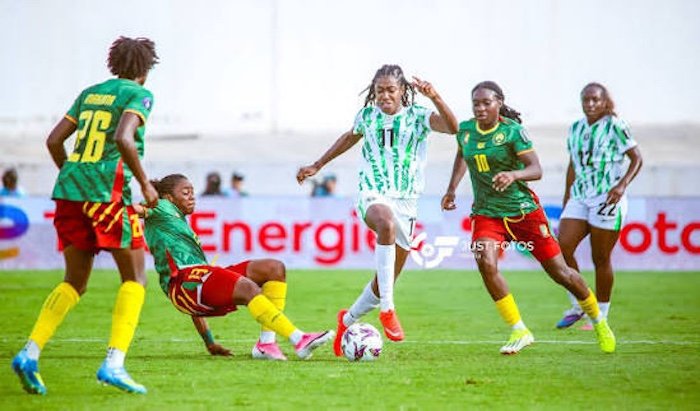
Nigeria’s Super Falcons fell 1-0 to Cameroon in their WAFCON 2026 quarter-final, undone by a lone Nyadjou strike in the 19th minute and a Cameroon goalkeeper who refused to be beaten for the rest of the match.
The eight saves by Michaely Bihina make the defeat particularly frustrating because they shows the Super Falcons created enough opportunities to change the game.
The bigger concern, however, is what the defeat says about Nigeria’s margin for error. In a knockout match, especially one with World Cup qualification at stake, creating chances is only half the job. Nigeria needed someone to take one of those opportunities away from Bihina. They didn’t.
Cameroon, on the other hand, showed exactly what knockout football demands. They scored early, absorbed pressure and protected their advantage. Bihina’s performance deserves enormous credit, but Nigeria also helped make the goalkeeper a hero by failing to convert their opportunities.
The consequences are bigger than simply missing out on a WAFCON semi-final. Nigeria now have to take the longer and much more dangerous route to the 2027 Women’s World Cup. Instead of controlling their fate through a semi-final qualification spot, the Super Falcons must survive an African play-off and potentially an inter-confederation play-off.
That is a needless complication for a team with Nigeria’s pedigree.
The Super Falcons remain one of Africa’s most accomplished women’s teams, but reputation does not win knockout matches. If Nigeria want to be among the world’s elite, they have to become more ruthless in games like this. Dominating possession, creating chances and forcing eight saves sounds encouraging on paper, but ultimately the scoreboard remembers only the one chance Cameroon converted.
This defeat should therefore be treated as a warning rather than a disaster. Nigeria’s World Cup dream is still alive, but the margin for another wasteful performance has become extremely small.