

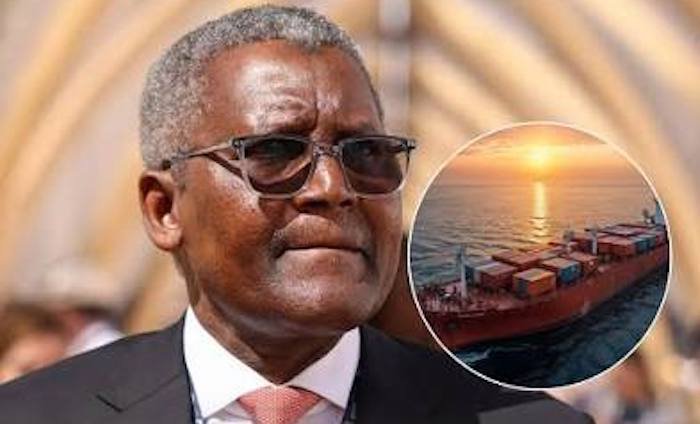
Dangote Industries is moving to acquire its own vessels as the conglomerate seeks to overcome shipping constraints and reduce the high cost of transporting its products to markets across West and Central Africa.
The plan was disclosed by Sada Ladan-Baki, Head of International Trade and Export at Dangote Cement, during a seminar on non-oil exports on Tuesday.
Ladan-Baki said the company had struggled to secure sufficient shipping capacity for regional exports, creating significant logistical challenges for its businesses.
She cited an instance where Dangote was unable to find a vessel to transport a 1,000-metric-tonne shipment to Ghana, despite the relatively short distance between Nigeria and the West African country.
“We are moving forward towards getting our own ships in order to do this business,” she said.
The company also faces difficulties with transporting goods by road. According to Ladan-Baki, products shipped to Ghana by road have to pass through countries including Benin and Togo, exposing exporters to additional taxes and other charges.
These costs, she explained, make Nigerian products less competitive in regional markets and have reinforced the need for Dangote to establish greater control over its transportation network.
The proposed vessel acquisition comes as maritime transportation becomes increasingly important to Dangote’s expanding operations.
The conglomerate’s $20 billion refinery in Lagos, in particular, has significantly increased Nigeria’s participation in seaborne petroleum trade. The United States Energy Information Administration recently reported that Nigeria’s petroleum-product exports by sea had increased seven-fold since 2023, with the growth driven largely by the Dangote refinery.
The refinery is also projected to receive and dispatch about 600 vessels annually, including ships transporting crude oil and those carrying refined petroleum products to local and international destinations.
However, the planned acquisition has drawn a note of caution from industry stakeholders.
Otunba Shola Adewumi, President of the Indigenous Shipping Association of Nigeria, said Dangote had historically depended on foreign-flagged vessels to move crude and refined petroleum products because Nigeria lacked vessels with sufficient capacity.
While welcoming the decision, Adewumi warned that purchasing vessels would only be the first step, as maintaining and managing them could prove more demanding.
“It is very easy to buy a ship, but maintaining the ship is a different ball game,” he said.
He also urged Dangote to register the vessels under the Nigerian flag, arguing that doing so would increase the country’s national fleet and strengthen its position in international shipping.
Adewumi added that the acquisition could create employment opportunities for Nigerian seafarers and other professionals in the maritime and international trade sectors.