

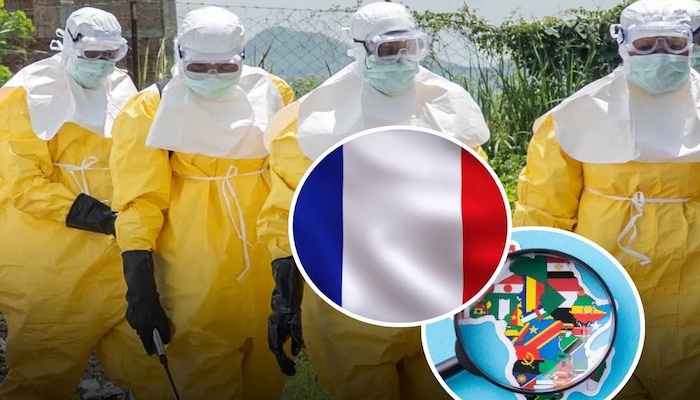
French health authorities have confirmed the country’s first recorded case of Ebola, triggering heightened surveillance measures and renewed global concern over the spread of the deadly virus currently affecting parts of Africa.
The French Health Ministry announced on Wednesday that the patient, a medical doctor who recently returned from the Democratic Republic of Congo (DRC), tested positive for the virus shortly after arriving in the country. Officials disclosed that the individual was immediately isolated upon detection and is receiving specialised medical care. Authorities also activated emergency response protocols, including contact tracing and public health monitoring, to prevent any possible spread.
The case marks a significant development in Europe’s public health landscape. While France treated two Ebola patients during the 2014 West African outbreak, those cases involved individuals diagnosed outside the country before being transferred for treatment. This is the first time Ebola has been officially detected on French soil.
Health experts have linked the current outbreak in the DRC and neighbouring Uganda to the Bundibugyo strain of the Ebola virus. Unlike previous variants, there is currently no approved vaccine or treatment specifically designed for this strain, raising concerns among health professionals. However, epidemiologists maintain that the risk of widespread transmission remains relatively low because Ebola is not easily spread through casual contact and requires direct exposure to infected bodily fluids.
French Prime Minister Sebastien Lecornu is reportedly monitoring developments closely as health authorities continue investigations into the patient’s recent movements and contacts. Public health agencies have assured citizens that precautionary measures are in place and that there is no immediate cause for panic.
The development has also drawn international attention, with organisations such as the World Health Organisation (WHO) and the Africa Centres for Disease Control and Prevention (Africa CDC) intensifying coordinated response efforts in affected regions. Global health observers note that increased international travel makes vigilance essential, particularly when outbreaks occur across multiple countries.
As authorities continue containment efforts, the case serves as a reminder of the importance of strong disease surveillance systems and international cooperation in responding to emerging health threats. Public health officials have urged citizens to rely on verified information while supporting efforts aimed at preventing further transmission.