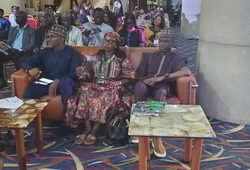



The family of 26-year-old nurse Mary Habila has appealed to the Inspector-General of Police (IGP), Kayode Egbetokun, to intervene in the ongoing dispute surrounding the release of her body for burial nearly three weeks after her death.
The appeal was made on Friday at the Force Headquarters in Abuja by the family’s lawyer, Kaile Yusuf, during a press briefing.
Mary Habila, who was attached to the office of the Minister of Works, David Umahi, died on June 27 under circumstances that have since generated public attention and controversy. Her body was reportedly discovered at a staff chalet within the minister’s country home in Uburu, Ohaozara Local Government Area of Ebonyi State.
Addressing journalists, Yusuf said the family had fulfilled all requirements requested by the police for the release of the body but had yet to receive approval to proceed with burial arrangements.
According to him, the continued retention of the remains has caused significant emotional distress to the family.
“It is regrettable that, having followed all necessary procedures required by the Nigerian Police, the body is yet to be released to the family for burial,” he said.
The lawyer also sought to correct what he described as misinformation surrounding the deceased’s identity and profession.
He stated that Habila was a qualified nurse and not a physiotherapist as reported in some media accounts.
According to Yusuf, she previously worked at the David Umahi University of Health Sciences before being deployed to the office of the Minister of Works, where she served for approximately three years as a civil servant.
He added that documentary evidence, including employment records and salary documentation, confirmed her official status.
Yusuf alleged that attempts were being made to politicise the circumstances surrounding her death and insisted that there was no legal basis for withholding the body after the family had complied with all necessary procedures.
He disclosed that the family had submitted a petition to the Inspector-General of Police against the Ebonyi State Commissioner of Police, seeking intervention to secure the immediate release of the remains.
The lawyer further revealed that the family had repeatedly rejected requests for an autopsy, citing personal, cultural and traditional considerations.
“We have consistently maintained our position against an autopsy because of our personal, cultural and traditional beliefs,” he said.
Yusuf also dismissed allegations circulating online about Habila’s personal life and character.
“It is important to make it clear that Mary Habila has never been a ‘runs girl’ or anything of that nature. She was a dedicated nurse working in Abuja before her unfortunate death,” he stated.
Speaking emotionally at the briefing, Habila’s father, Tanko Habila, appealed to authorities to release his daughter’s body.
“All I want is the corpse of my daughter. We do not keep the bodies of young people for this long. I need the body of my daughter so that we can give her a proper burial,” he said.
He stressed that the family was not accusing anyone of responsibility for her death and noted that they had maintained a cordial relationship with her workplace prior to the incident.
Also speaking, a colleague of the deceased, Anita Baaki, clarified that she—not Habila—was the physiotherapist, while Habila worked as a nurse.
The dispute over the release of the body centres on whether an autopsy should be conducted before burial.
While the family insists it has met all conditions for the release of the remains and opposes a post-mortem examination, the Ebonyi State Police Command and the Minister of Works have maintained that an autopsy is necessary to determine the exact cause of death.
Police authorities have argued that the sensitive nature of the case requires a thorough investigation, while Umahi has repeatedly stated that he directed that the body should not be released until a post-mortem examination is carried out.
Investigations into the circumstances surrounding Habila’s death remain ongoing.