The federal government has declared an end to the era of oil companies holding petroleum assets without developing them, insisting that operators must either invest in production or relinquish their licences under the drill-or-drop provisions of the Petroleum Industry Act (PIA).
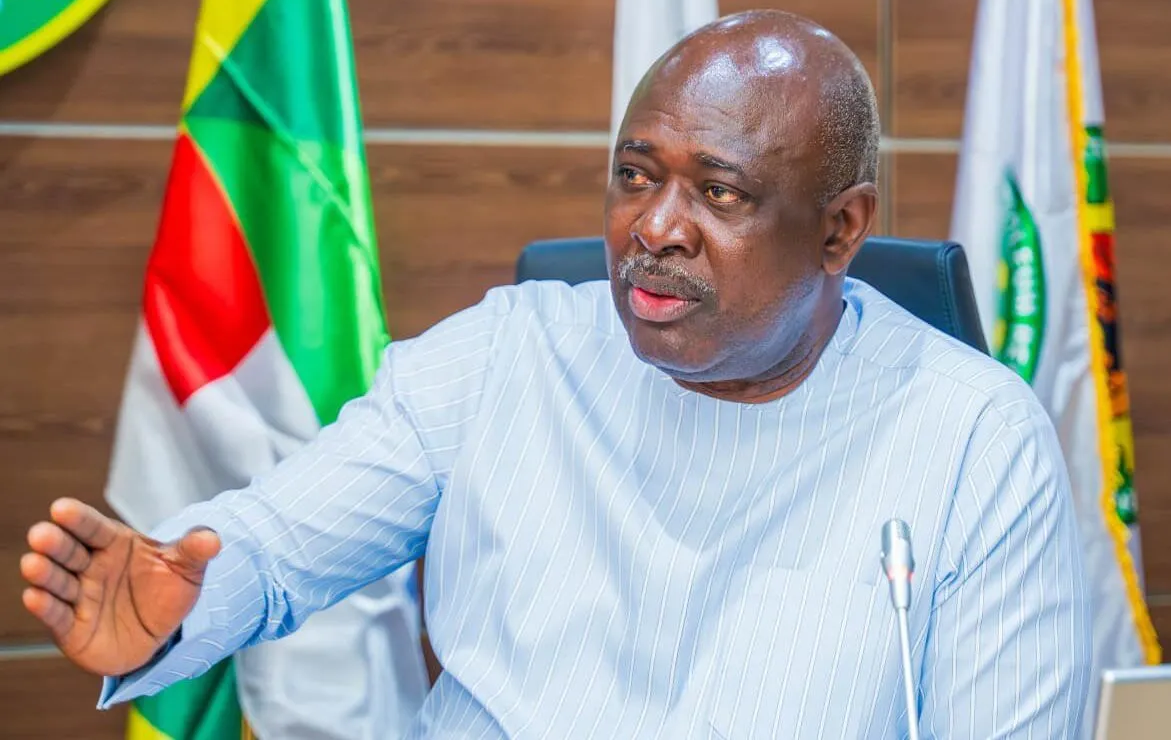
Minister of State for Petroleum Resources (Oil), Senator Heineken Lokpobiri, said the policy has empowered the Nigerian Upstream Petroleum Regulatory Commission (NUPRC) to recover undeveloped assets and make them available to investors willing and able to develop them.
Also, a former Minister of State for Petroleum Resources, and Group Managing Director of the Nigerian National Petroleum Corporation (NNPC), Prof. Ibe Kachikwu, has recalled how government interference and cumbersome approval processes delayed decisions and constrained investment during his tenure at the national oil company.
In the same vein, Minister of State for Petroleum Resources (Gas), Ekperikpe Ekpo, said Nigeria must translate its 215 Trillion Cubic Feet (TCF) of proven gas reserves into higher domestic supply, stronger infrastructure and industrial growth over the next five years.
Similarly, the Olu of Warri, Ogiame Atuwatse III, has maintained that the PIA has brought greater calm and responsibility to oil-producing communities by giving them a clearer stake in petroleum operations through Host Communities Development Trusts (HCDTs).
They all spoke in a series of interviews published in ‘Upstream Gaze’, a special edition of a quarterly magazine by the NUPRC to mark its fifth anniversary.
Lokpobiri said the policy had helped make petroleum assets available for fresh investment, with 50 assets recently offered for bidding and another licensing round in the offing.
The drill-or-drop policy, provided for under the PIA requires oil and gas companies to develop their licensed petroleum assets within the stipulated period or risk losing them to the government. The policy empowers the regulator to revoke or recover licences for undeveloped assets and make them available to investors willing and capable of putting them into production.
Essentially, it is designed to discourage speculative ownership and the hoarding of oil blocks which has been the norm, accelerate exploration and development, attract fresh investment, increase crude oil and gas production, and help Nigeria achieve its production targets.
Lokpobiri said: “The drill-or-drop provision is one of the most consequential provisions of the PIA. It has kept operators on their toes. If you do not develop your assets within the provisions of the law, the NUPRC has the authority to recover those assets and make them available to investors that are willing and able to develop them.
“The era of holding assets as souvenirs or symbols of wealth is gone: you either drill or drop. Some operators are now willing to relinquish assets voluntarily because that may be preferable to regulatory recovery. Others are reassessing their portfolios and recognising that certain assets no longer fit their development plans.”
He also attributed the increase in active drilling rigs to reforms and improved regulatory activity, saying the number had risen from between 10 and 14 in 2023 to more than 60 currently.
However, the minister said the departure of major Engineering, Procurement and Construction (EPC) contractors, deep-offshore contractors and other service providers had contributed to higher project costs in Nigeria, following prolonged uncertainty before the passage of the PIA.
According to him, inadequate project activity had made it difficult for contractors to sustain their operations, prompting some to leave the country and reducing competition in critical areas of the industry.
“The cost of our projects became higher than in some other jurisdictions because there was limited competition and insufficient project activity. Contractors can only survive where there are projects to execute. If the project pipeline dries up, they will leave,” he said.
“Many contractors therefore left the country, leaving only one or two providers in some areas and contributing to prohibitive costs. That was a major challenge, but we are now working to bring them back.”
Lokpobiri said the government was engaging contractors in Europe and America to encourage their return, while pursuing fiscal, operational and regulatory reforms to improve Nigeria’s competitiveness.
He added that a recent presidential executive order was expected to help unlock almost $50 billion in deep-offshore investments, while the re-entry of shut-in wells following recent divestments was contributing to production growth.
He cited developments following Seplat Energy’s acquisition of ExxonMobil’s assets and Renaissance Africa Energy’s acquisition of Shell’s onshore assets as examples of efforts to revive previously inactive wells.
Looking ahead, Lokpobiri said Nigeria could significantly increase crude oil production over the next five years if investment commitments and development programmes materialised, projecting a potential output range of 3 million to 5 million bar els per day.
Kachikwu: Govt Interference Hobbled My Work as Minister
Also, former Group Managing Director of the NNPC and former Minister of State for Petroleum Resources, Prof. Kachikwu, has recalled how government interference and cumbersome approval processes delayed decisions and constrained investment during his tenure at the national oil company.
Kachikwu said the petroleum industry had suffered from excessive government control, which restricted managerial independence and made it difficult to implement decisions quickly, even when the commercial case for action was clear.
“The oil sector could be very frustrating because there was a great deal of government interference. In my case, I had the rare privilege of serving as both GMD of NNPC and Minister of State. Dealing with the investment process at NNPC was difficult because you could hardly do anything without government approval.