


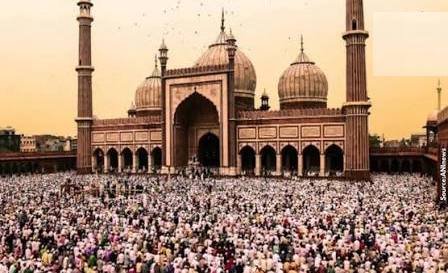
Nigerian workers will have Tuesday, August 25, 2026, off, after the Federal Government declared it a public holiday to mark this year’s Eid ul Mawlid, the annual commemoration of the birth of Prophet Muhammad (Peace Be Upon Him).
Minister of Interior Olubunmi Tunji-Ojo announced the holiday on behalf of the Federal Government, in a statement signed by the ministry’s Permanent Secretary, Dr Magdalene Ajani, released Friday. The minister used the announcement to extend greetings to Muslims across Nigeria and in the diaspora, while framing the occasion as an opportunity for reflection that extends beyond Nigeria’s Muslim population specifically.
“Every Eid ul Mawlid gives us reason to pause and draw lessons from a life defined by compassion, humility and service to others,” Tunji-Ojo said. “These are qualities our nation needs now more than ever, and I encourage every Nigerian, not just our Muslim brothers and sisters, to reflect on them.”
Beyond the religious significance of the day, Tunji-Ojo tied the occasion to a broader appeal for unity, urging Nigerians to use the holiday as a moment to pray for peace and national cohesion. He described maintaining that unity as a shared responsibility rather than something any single group or institution can sustain alone, and asked citizens to mark the day with restraint and mutual respect toward one another.
The minister closed his statement by reaffirming the Federal Government’s commitment to protecting lives and property nationwide, and to preserving the peace he referenced throughout his remarks, alongside wishing Nigeria’s Muslim community a peaceful and joyous Eid.
Eid ul Mawlid, also widely known as Mawlid an-Nabi, holds a significant place on Nigeria’s religious calendar, particularly across the northern states and other Muslim-majority communities nationwide. In many parts of the country, the day is typically marked by mosque gatherings, recitations honoring the Prophet’s life, communal meals, and processions in some regions, alongside private reflection and prayer. Nigeria’s official recognition of the holiday reflects the country’s practice of designating public holidays for major religious observances across both its Muslim and Christian populations, a tradition intended to acknowledge the country’s religious diversity.
With the declaration now official, government offices, schools, banks, and many private businesses are expected to observe the holiday on Tuesday, in line with standard practice for federally recognized public holidays. As with previous Eid holidays, the government’s message has centered as much on national unity and peaceful coexistence as on the religious observance itself, a pairing that has become a recurring feature of how Nigerian officials frame these occasions.