

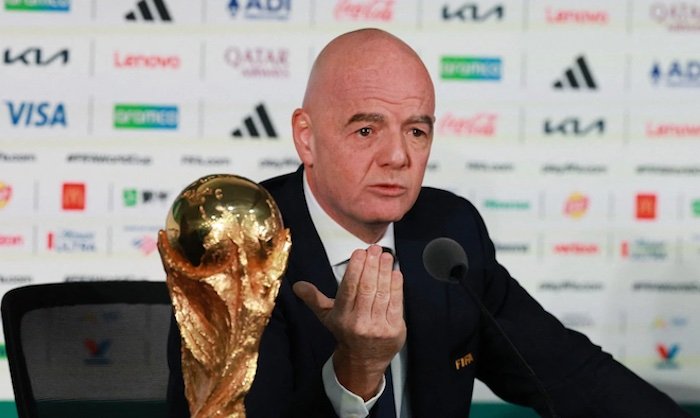
FIFA’s senior leadership closed ranks around President Gianni Infantino on Wednesday, offering him “full support” during a crisis meeting in Morocco even as the organisation formally apologized for how badly it mishandled a now-abandoned plan to open World Cup ownership to private investors.
The controversy traces back to a proposal FIFA floated to create a new commercial subsidiary, the FIFA Forward Enterprise, valued at $20 billion and projected to raise up to $4.2 billion by running events including the World Cup and Club World Cup. FIFA framed the plan as a financial boost for its member associations, promising a one-off $20 million payment to each of the 211 associations in early 2027 and tripling their funding allocation for the following four-year cycle. Instead of winning support, the proposal triggered immediate backlash once details leaked, with UEFA branding it a “shabby, back room, opaque deal” and warning that Infantino had lost the confidence of much of the football world. By Saturday, facing mounting pressure that included a boycott threat from UEFA and sharp criticism from CONCACAF, Infantino withdrew the plan entirely. “Our purpose has always been — and will always be — to unite and improve,” he said at the time.
Wednesday’s meeting in Rabat brought together FIFA’s Secretary General and Management Board members, who emerged with a statement reaffirming their backing for Infantino as “the only official elected by the 211 FIFA Member Associations,” while simultaneously acknowledging significant missteps in how the process was handled. The statement conceded that FIFA never intended to make the Council and member associations feel shut out of the decision-making process, admitting “it was not the intention… to feel excluded” and that things “should have been handled differently.” FIFA went further, acknowledging additional errors in how it responded once the proposal leaked to media, and issued a formal apology in a separate letter to the Council and member associations, along with a pledge to prevent similar mistakes going forward.
A review of the episode is now underway, with findings expected to be presented at FIFA’s next Council meeting. The organisation confirmed unambiguously that the FFE proposal itself is now “off the table.”
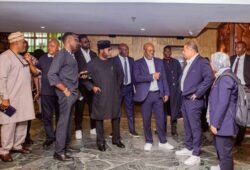
Later Wednesday, Infantino, who had traveled to Morocco to mark last week’s Feast of the Enthronement, appeared publicly at a Women’s Africa Cup of Nations match between Zambia and Malawi in Rabat, seen alongside Moroccan football federation president Fouzi Lekjaa, one of the few officials to have defended him publicly since the plan’s collapse. Lekjaa had previously praised Infantino’s decision to scrap the proposal as “wise” and reaffirmed his support for the FIFA president’s broader development work over the past decade.
The fallout has nonetheless been substantial. Canadian Prime Minister Mark Carney, whose country co-hosted the 2026 World Cup, said Wednesday he no longer has confidence in Infantino’s ability to lead FIFA, a striking statement given that Infantino’s bid for a fourth term had appeared virtually uncontested heading into next March’s vote in Rabat, before the controversy upended that trajectory entirely.