Media advocacy organisations have renewed calls for stricter enforcement of Nigeria’s Freedom of Information Act, urging authorities to impose sanctions on public institutions and officials that consistently fail to comply with the law.
The demand was made by Media Rights Agenda (MRA) and the International Press Centre (IPC), which expressed concern that more than a decade after the enactment of the Freedom of Information Act, many government institutions still frustrate citizens’ access to public information through delays, denials and outright silence.
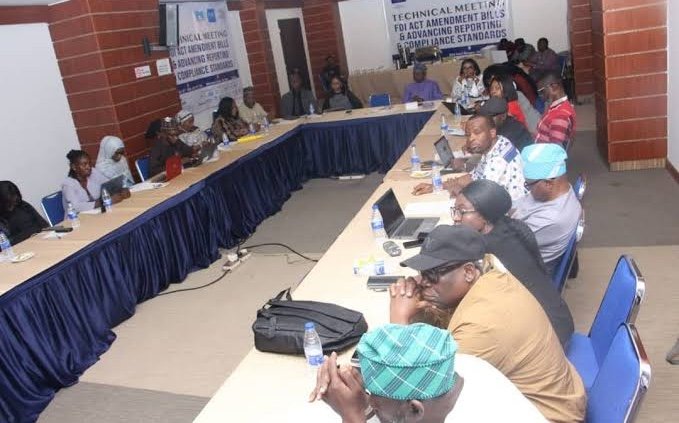
The call formed part of resolutions reached at a multi-stakeholder conference held in Lagos to commemorate the 2026 International Day for Universal Access to Information. The event, themed “Freedom of Information in the Age of Disinformation: Why Transparency Matters More Than Ever,” brought together journalists, legal practitioners, civil society groups and media professionals to assess the state of access to information in Nigeria.
Speaking at the conference, IPC Executive Director, Lanre Arogundade, stressed that the fight against misinformation cannot succeed without transparent public institutions. According to him, citizens should not bear the sole responsibility of verifying information when government agencies fail to provide timely and accurate data.
He argued that public institutions have a duty to explain their decisions, publish information proactively and respond to legitimate requests in line with the provisions of the law.
Participants observed that compliance with the FOI Act remains poor across many federal, state and local government institutions. They noted that several agencies either ignore requests completely, refuse access without lawful justification or fail to publish mandatory information required under the Act.
The conference identified ignorance of the law, weak institutional structures and a longstanding culture of secrecy within public service as some of the factors hindering effective implementation. Stakeholders also warned that delayed responses to information requests often undermine investigative journalism, accountability reporting and citizen participation in governance.
A major concern raised during the discussions was the absence of meaningful consequences for institutions that violate the law. Participants said this had encouraged a culture of impunity, allowing many public officials to disregard FOI obligations without repercussions.
The conference therefore urged governments at all levels to demonstrate stronger commitment to transparency by establishing dedicated FOI units staffed with trained personnel. It also called on public institutions to comply with proactive disclosure requirements contained in the Act.
Stakeholders further appealed to the Attorney-General of the Federation to strengthen oversight of FOI implementation, while urging the judiciary to ensure speedy determination of FOI-related cases so that information obtained through litigation remains useful and relevant.
They also pledged greater collaboration among journalists, lawyers and civil society organisations to promote the use of the FOI Act as a tool for accountability, transparency and democratic governance.