

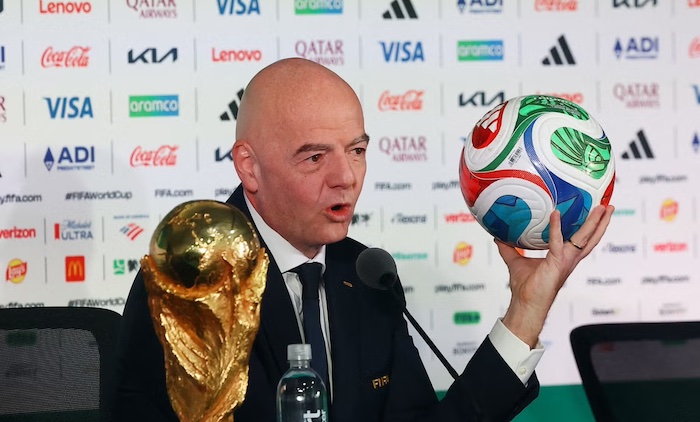
On the eve of the 2026 World Cup opening match, FIFA President Gianni Infantino stood before cameras in Mexico City and delivered a masterclass in institutional deflection.
Tickets too expensive? Demand was massive, he said, and lower prices would’ve just fueled resellers. Fans and officials blocked from entering the US? Border decisions belong to national governments, not FIFA. Omar Artan turned back at Miami despite a valid visa and FIFA accreditation? Unfortunate, but outside FIFA’s control.
It was smooth. It was also a calculated dodge of a more basic question: who actually made the calls that led to all this?
FIFA did.
FIFA chose the United States as a co-host nation. That decision was made with full knowledge of the country’s immigration enforcement environment looked like, the active and constant travel restrictions affecting nationals from several competing countries’ supporter bases, and the heightened scrutiny that travellers from certain regions would face at American borders. The Artan situation was not a shock that no one saw coming. It was a predictable consequence of a hosting decision made years in advance.
FIFA also pushed the tournament to 48 teams, the biggest World Cup ever, which created record ticket demand. Infantino himself said over six million tickets were sold and demand still outstripped supply. That expansion drove prices up..
On the Artan case specifically, Infantino said FIFA continues to work behind the scenes to resolve outstanding cases where possible. But working behind the scenes produced no result for Artan. He spent 11 hours detained at Miami International Airport, then was sent back to Istanbul. His World cup ended. Whatever behind-the-scenes work FIFA was doing, it was not enough to protect an official the organisation had personally selected, accredited and celebrated as a historic appointment.
Infantino argued that logistical and administrative challenges were inevitable for an event of this scale and that issues had emerged across all three co-host countries. Inevitability is a convenient word for an organisation that collected billions from this tournament. It allows failures to be reframed as natural phenomena rather than the product of choices, priorities and negotiations that FIFA controlled.
The World Cup is FIFA’s event. The revenue is FIFA’s revenue. The decisions were FIFA’s decisions.
The consequences, apparently, belong to everyone else.
By Ezeana Emmanuel