

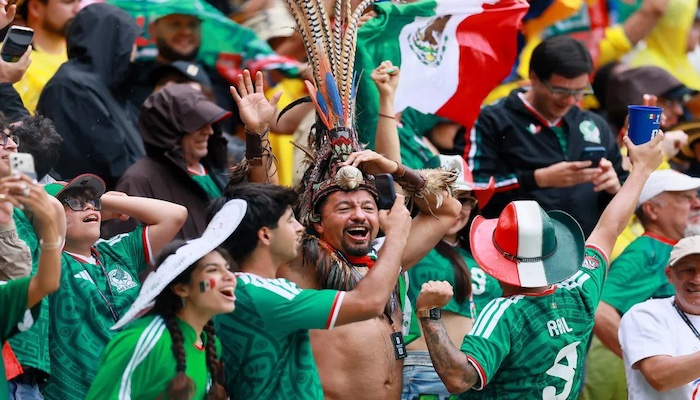
Somewhere in Nigeria, a woman put on a sombrero and declared herself Mexican. In Ghana, an influencer posted what became one of the most shared lines of the tournament’s opening day: “Mexico vs South Africa: If we support South Africa, they’ll say we are taking their jobs.”
No one formally organized this switch in loyalty. It just happened, and it spread, and by the time Mexico kicked off against South Africa at the Estadio Azteca on Thursday night, a significant portion of the African continent had quietly, loudly and hilariously switched allegiances.
The campaign began on Nigerian X and TikTok, with users urging the rest of Africa to rally behind Mexico on the grounds that Mexicans had proven more accommodating and welcoming to Africans than South Africa has been to its continental neighbours. It quickly took on a life of its own. Users began adopting Mexican names alongside their African ones. Someone wrote: “The South Africa vs Mexico games will really be funny. The Mexicans will be confused when they see names like Chiamaka Guadalupe, Kofi Miguel and Obafemi Pablo.”
However funny the jokes have been with the many, many memes, the sentiment behind them is not.
Human Rights Watch reported in May 2026 that vigilante groups carried out violent attacks on African migrants in Pretoria, Johannesburg and Durban, just months before the World Cup kickoff. Six African governments, Kenya, Malawi, Lesotho, Zimbabwe, Nigeria and Ghana, warned their citizens in South Africa about safety. Anti-migrant groups also set June 30 as the deadline for undocumented foreigners to leave. These aren’t online complaints. They’re documented concerns raised at government level about the safety of Africans in Africa.
Nigerian politician Denge Josef Onoh drew a direct parallel to the 1976 Montreal Olympics boycott, when 29 African countries led by Nigeria refused to compete in protest at New Zealand’s sporting ties with apartheid South Africa. “South Africa, the very nation we helped liberate, now stands accused by many across the continent of harbouring deep-seated xenophobia toward fellow Africans,” he said.
You can tune out a lecture on xenophobia. You can shelve a think-tank report. But a Kenyan woman in a sombrero singing for Mexico in her living room gets through in a way formal statements usually don’t.
South Africa won the right to represent Africa at this World Cup. On Thursday, much of Africa cheered for the other side. That is not a trivial thing. It is a message, delivered in the only language that guaranteed it would be heard.
Mexico won 2-0. Africa was not surprised.