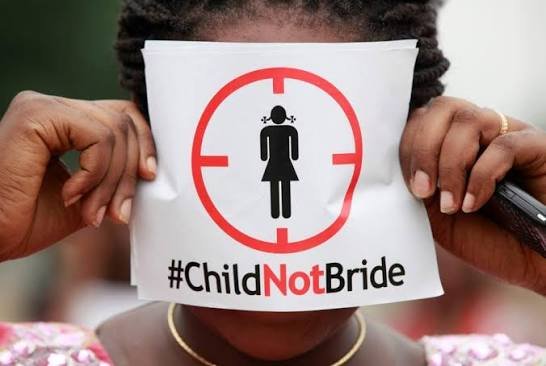
The National Council of Women’s Societies (NCWS) has called for urgent action to end child marriage in Nigeria, warning that more than 24 million women and girls alive in the country today were married before turning 18.
The council made the call in a statement marking the International Day of the Girl Child, urging federal and state authorities to strengthen enforcement of existing laws and invest in programmes that protect girls from early marriage.
Citing UNICEF figures and the 2023–2024 Nigeria Demographic and Health Survey, the NCWS said 33.4 per cent of women aged 20 to 24 had married before their 18th birthday. It also noted that the prevalence of child marriage approaches 50 per cent in the North-east and North-west.
National President of the council, Princess Edna Azura, described the practice as a national development crisis driven largely by poverty. She warned that early marriage can expose girls to serious health risks, including eclampsia, infections and obstetric fistula, while interrupting their education and limiting future economic opportunities.
The council also highlighted the relationship between education and the age at which women marry. According to the figures cited, women without formal education marry at a median age of 16.6 years, compared with 21.7 years for those who complete secondary education.
The scale of educational exclusion remains another concern. The NCWS cited an estimated 7.6 million girls out of school nationwide, a situation that can leave many vulnerable to early marriage and reduce their access to alternative pathways to independence.
The statement also referenced a 2025 study by UNICEF and the Federal Ministry of Women Affairs, which estimated that investing $114 million in out-of-school girls in two northern states could generate $2.5 billion in economic benefits.
Despite all 36 states having adopted the Child Rights Act, the council said implementation remained weak. It called for enforcement of Section 21, which establishes 18 as the minimum marriage age under the Act, and a review of Section 29(4)(b) of the Constitution.
The NCWS outlined an eight-point action plan that includes free birth registration, compulsory marriage registration with age verification, training for justice officials, school feeding, conditional cash transfers, second-chance education for married girls and adequately funded child protection services.
These measures, the council argued, should be backed by sustained funding and effective enforcement rather than policy commitments alone.
Azura said protecting girls from child marriage was essential to safeguarding their rights and future opportunities. “A girl’s childhood is not ours to give away,” she said.
The council urged authorities to treat the issue as both a child-protection priority and a barrier to Nigeria’s development goals, warning that progress towards ending child marriage by 2030 would require coordinated and measurable action.