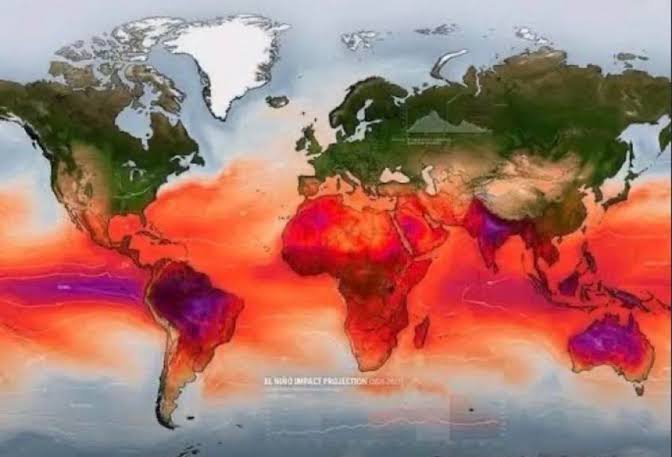
Nigeria could experience an estimated 31,400 additional heat-related deaths between September 2026 and February 2027 as unusually high temperatures associated with a strong El Niño event increase health risks, according to a report by the Climate Impact Lab.
The report, titled 451,000 at Risk: Where Action Can Save Lives During the Super El Niño, estimates that heat could cause 451,000 additional deaths worldwide between June 2026 and February 2027 compared with a normal year. The researchers say global land temperatures could average 1.2 degrees Celsius above normal in the coming months, accompanied by 44 per cent more extremely hot days than would typically be expected.
Nigeria is projected to account for nearly half of the 66,800 additional heat-related deaths estimated across the Sahel region during the September-to-February period. The report also projects that the country could record 15,400 additional heat-related deaths between December 2026 and February 2027 alone.
Other countries in the region are also expected to face substantial risks. The report estimates 17,500 additional heat-related deaths in Sudan, 10,000 in Niger and 8,000 in Chad during the six-month period.
The figures are projections, not confirmed deaths or a guarantee of future outcomes. They estimate excess mortality associated with forecast temperatures compared with a baseline derived from average conditions between 1996 and 2025. The researchers say the figures incorporate uncertainty in seasonal forecasts and in estimates of the relationship between temperature and mortality.
Michael Greenstone, a co-founder of the Climate Impact Lab and professor of economics at the University of Chicago, said advances in climate and health modelling were making it possible to estimate the potential human cost of extreme temperatures.
The report recommends early interventions to reduce preventable deaths, including heat-warning systems, targeted outreach to vulnerable people, cooling centres, hydration stations, protections for outdoor workers and additional capacity for health services.
Such measures are particularly important for people who have limited access to cooling, safe drinking water or timely medical care during periods of extreme heat. Effective public communication and preparedness by health authorities could also help communities respond to dangerous conditions.
The report’s projections highlight the importance of treating extreme heat as a public health risk, rather than solely a weather concern. However, the scale of the eventual impact will depend on actual temperature conditions, exposure levels and the effectiveness of preventive measures.
Deborah Adeyefa