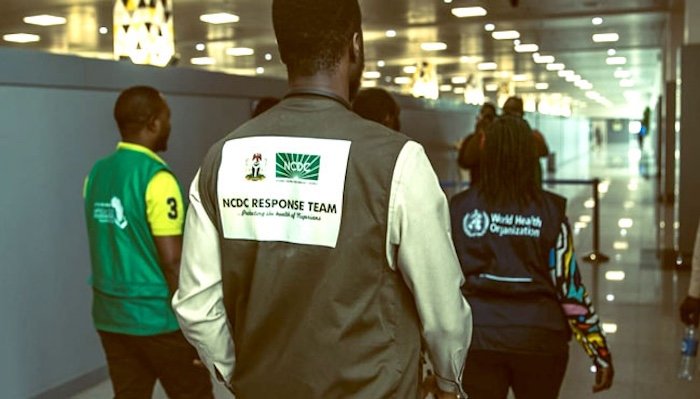
Nigeria’s confirmed Ebola patient is the Ugandan-born wife of a Swiss diplomat based in Abuja, according to Switzerland’s Federal Department of Foreign Affairs, as health authorities continue investigating how she contracted the virus.
The 42-year-old woman tested positive for Ebola on October 20, 2026, in what Nigerian authorities described as the country’s first confirmed case in more than a decade. She reportedly returned to Abuja on October 3 after travelling to Uganda, where she had spent part of September.
In a statement to Reuters, Switzerland’s foreign affairs department said the woman had spent about a week receiving treatment at a private clinic in Abuja before her diagnosis. Swiss authorities said she was believed to have contracted the virus during her trip to Uganda, although the precise source of infection had not been established.
Her husband, who travelled with her, was reportedly in isolation but had not developed symptoms at the time of the statement.
There have been conflicting accounts of the woman’s travel history. Ugandan officials had said she travelled to the eastern Democratic Republic of the Congo before passing through Uganda. However, the World Health Organisation said information supplied to it did not include travel to another country apart from Uganda.
In a subsequent update on Friday, Switzerland’s foreign affairs department told Reuters that the woman and her husband had not travelled to the Democratic Republic of the Congo, contradicting the earlier account from Ugandan authorities. The precise location where the infection occurred therefore remained unconfirmed.
The WHO representative in Nigeria, Pavel Ursu, said the patient remained hospitalised and that her biochemical markers were improving. Health authorities have been working to reconstruct her movements and identify possible exposure points, including health facilities she visited after developing symptoms.
The case involves the Bundibugyo strain of Ebola virus, which has been associated with an outbreak first reported in the Democratic Republic of the Congo in May 2026. The outbreak has also affected other African countries, according to health agencies.
Ebola is a serious viral disease that can cause severe illness and spreads through direct contact with the blood or bodily fluids of an infected person or contaminated materials. Prompt identification of cases, isolation, contact tracing and infection-prevention measures are important in limiting transmission.
Nigerian health authorities are continuing response efforts following confirmation of the case. The patient’s travel history and possible exposure remain subjects of investigation, and the available information does not establish conclusively where she contracted the infection.
Deborah Adeyefa