

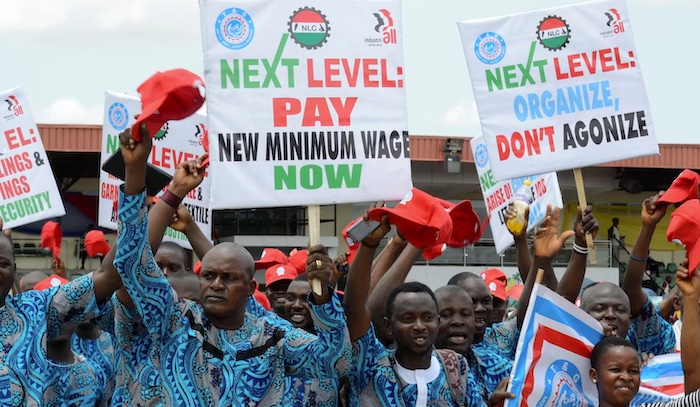
Last Saturday, 30th of May 2026, Nigeria’s state governors proposed a new national minimum wage of N100,000 per month. No doubt they likely expected some sort of praise or applause for the proposal but this was immediately dismissed by the Nigeria Labour congress who in turn demanded figures as high as 1 million naira monthly. To the average person, this may look like the usual standoff between labour and government but it is a little deeper than that. It is revelation that naira has collapsed beneath the feet of ordinary Nigerians.
Let’s look at the facts. The minimum wage back in 2019 was raised to N30,000. At the exchange rate of that period, that was about $83 per month. The government today are proposing N100,000. Now, on paper that is a 233% increase but in dollar terms, it is about $62 at current parallel market rates. This practically means that Nigerian workers are being offered a “raise” that, in real purchasing power, is more of a pay cut from seven years ago.
The data from NLC also lends credit to this point. Nigerians now need about N1,541 per day to simply eat a healthy diet. That is N46,230 a month and that is just feeding. The proposed N100,000 from the governors will at the end leave a worker with less than N54,000 for rent, transport, healthcare, school fees and other necessities of life. With our current economy, especially in Lagos, it will not get you far.
Inflation and currency problems sits at the helm of issues that the wage debate struggles to keep up with. The removal of fuel subsidy in 2023 and liberalization of foreign exchange market under President Tinubu has led to naira losing more than half its value. The prices of food, fuel and imported goods have risen sharply. Wages, in contrast, moves slowly always arriving late to a crisis that has already moved on.
The sad reality is that there is no minimum wage figure that the government and labour can agree on that will stay relevant for long as long as underlying monetary conditions remain unstable. A minimum wage of N200,000 could be functionally worthless by 2028 if inflation continues its current trajectory.
What Nigeria’s minimum wage debate ultimately reveals is a government caught between two uncomfortable truths: the reforms that were supposed to stabilise the economy have, in the short term, made everyday life significantly harder for its lowest-paid workers, and no wage negotiation can fully compensate for a naira in freefall.
The governors’ N100,000 offer is not stingy because they are heartless. It is inadequate because the problem was never really about the number. It was always about what the number can actually buy.
And right now, in 2026, it cannot buy enough.
Source: Legit.ng